
The electric vehicle industry is entering a new phase in the Middle East. What was once seen as an emerging transport trend is now becoming a serious business opportunity shaped by government policy, infrastructure investment, clean energy goals, and rising demand for smarter mobility solutions.
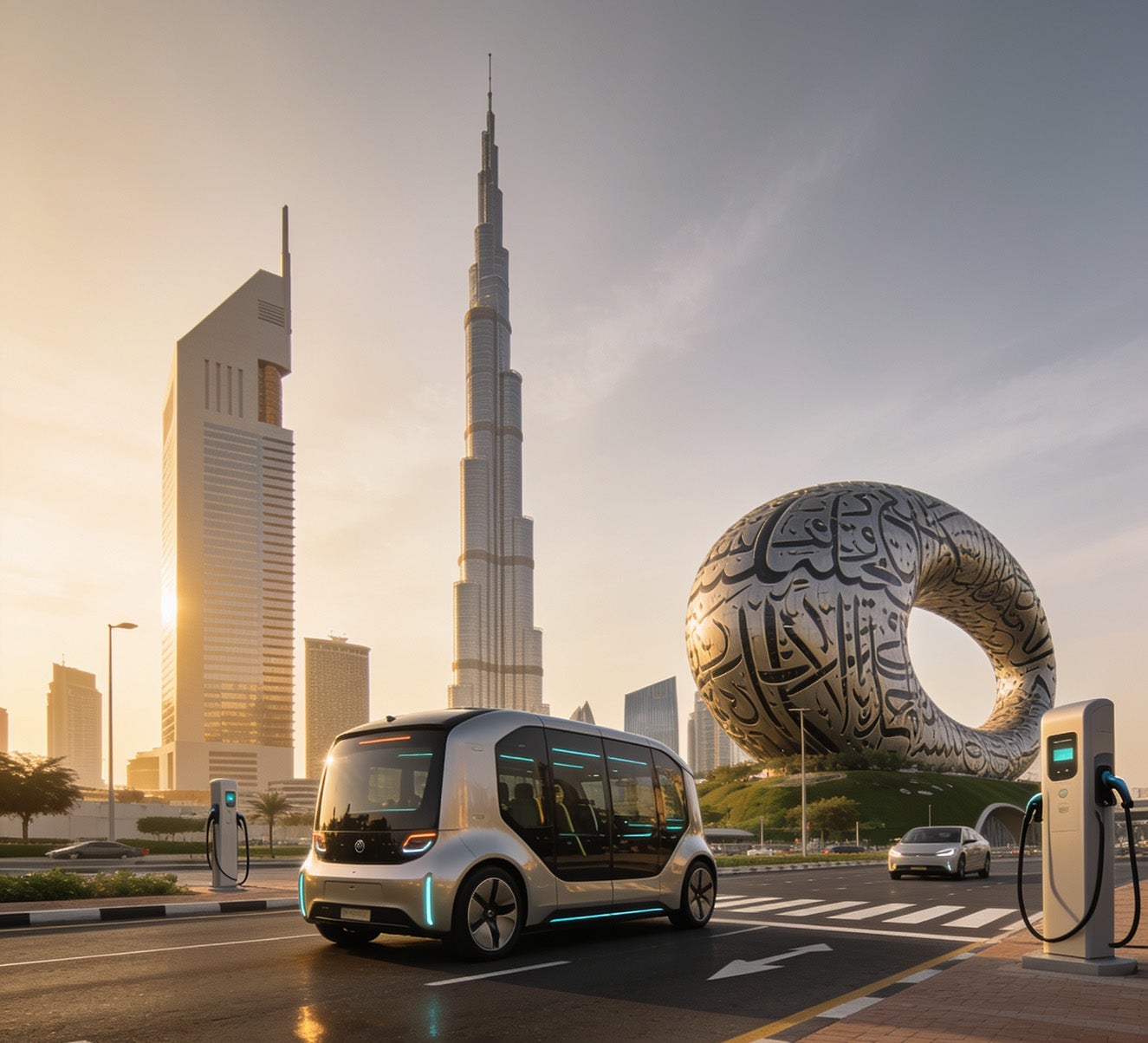
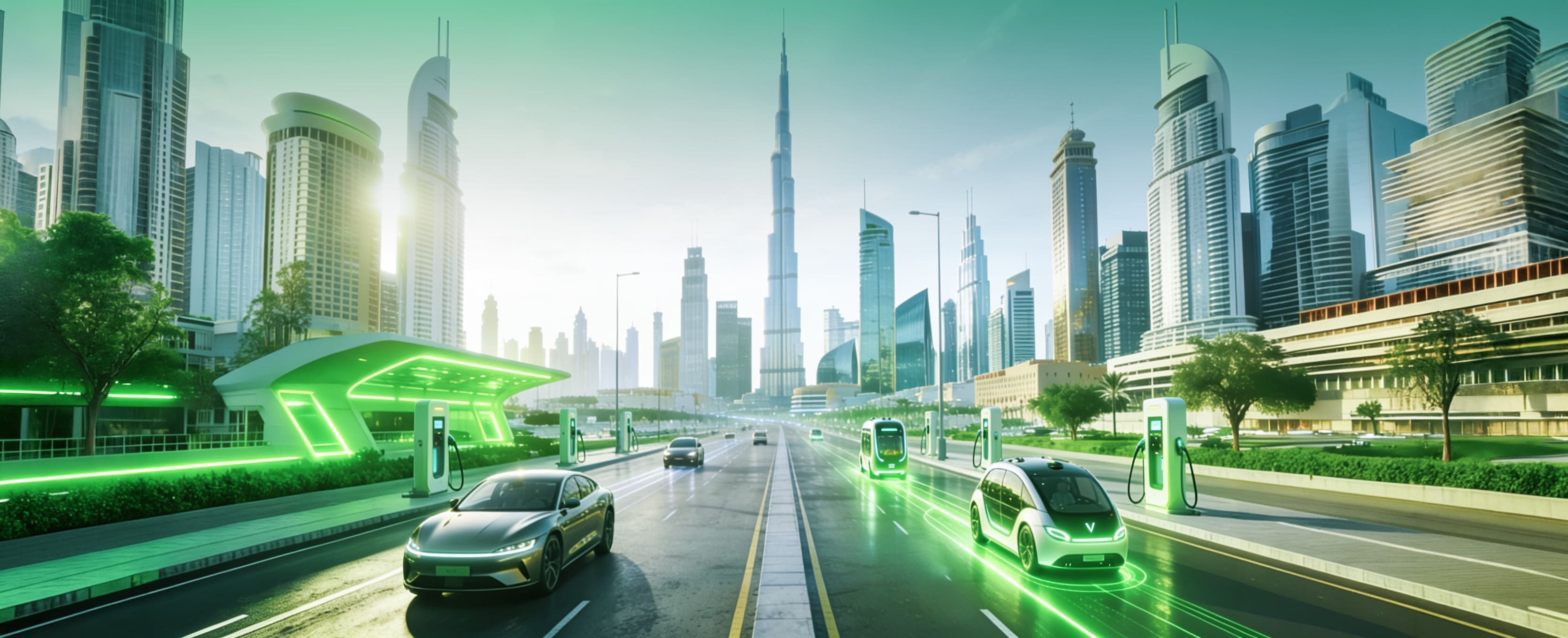
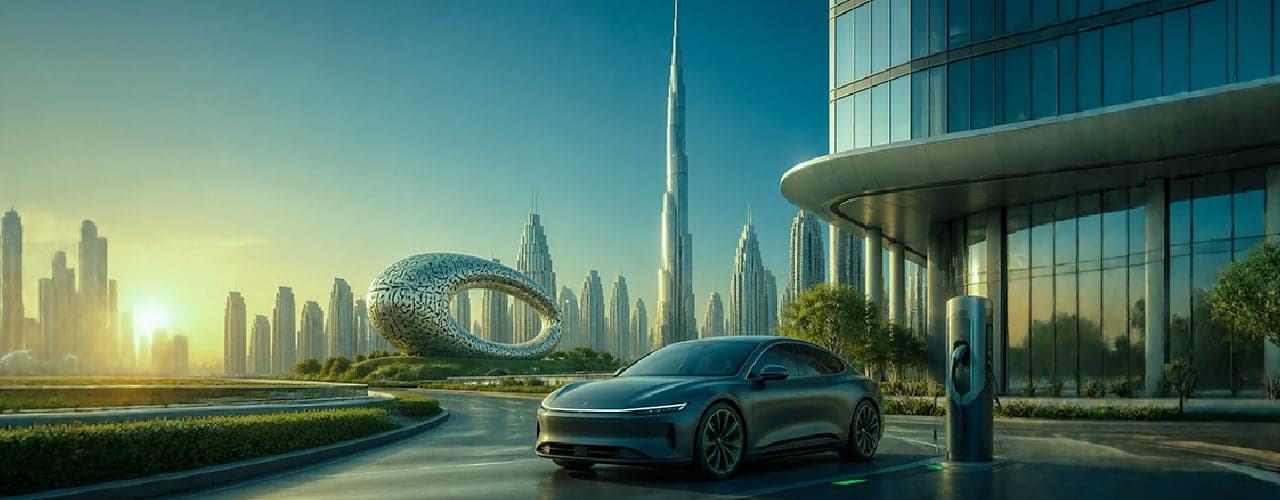
At the center of this shift is the UAE. With strong national strategies, expanding EV infrastructure, and Dubai’s growing role as a global smart city, the country is positioning itself as one of the region’s leading hubs for electric mobility, sustainable transport, and future ready infrastructure. For mobility stakeholders, the UAE is becoming a strategic gateway to the Middle East’s electric mobility future.
What Makes the UAE an EV Business Hub?
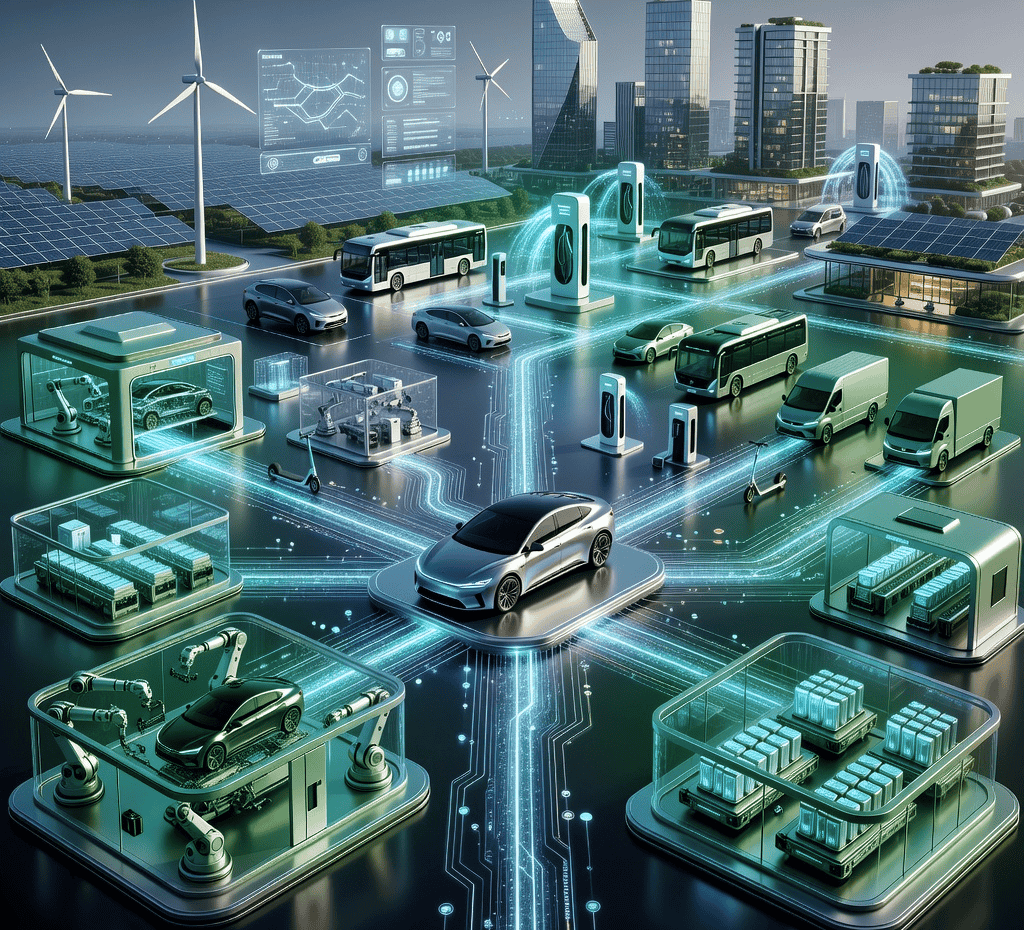
An EV business hub is more than a place where electric vehicles are sold. It is an ecosystem where policy, infrastructure, investment, technology, and market demand come together to support long term industry growth.
In the UAE, this ecosystem is being shaped by several factors, including:
- Clear national sustainability strategies
- Government support for EV adoption
- Expanding EV charging infrastructure
- Smart mobility and digital transport systems
- Public private partnerships
- Growing investment in clean energy and technology
- Dubai’s role as a regional business and innovation gateway
This combination gives the UAE a strong competitive position. It allows international companies to access a market that is supported by regulation, and infrastructure readiness.
Government Vision Is Driving Market Confidence
One of the UAE’s strongest advantages is that electric mobility is supported by clear government direction. The UAE Net Zero 2050 Strategy identifies transport as one of six priority sectors in the national transition and positions net zero as a driver of economic and societal advancement. The strategy is also expected to create 200,000 job opportunities across the solar, battery, hydrogen subsectors and contribute around 3% to national GDP.
For businesses, this creates confidence. When government strategies are clear, investors and companies can plan with greater certainty. This is especially important in a sector that requires long term investment in infrastructure, technology, fleets, energy systems, and customer adoption.
Dubai’s EV Infrastructure Is Expanding Rapidly
Charging infrastructure is one of the most important foundations of EV market growth. Without reliable charging access, adoption becomes slower for consumers, businesses, and fleet operators.
Dubai has made significant progress in this area. As Dubai Electricity & Water Authority (DEWA) EV Green Charger initiative has also played a key role in supporting Dubai’s EV infrastructure. The initiative helped create the region’s first public charging infrastructure for electric vehicles, with charging locations available through DEWA’s website, smart app, and other digital platforms.
This infrastructure growth is important because it supports fleet electrification, and creates new opportunities for charging operators, energy providers, real estate developers, and technology companies.
The Role of Dubai’s Green Mobility Strategy
Dubai’s Green Mobility Strategy 2030 has helped create a stronger framework for sustainable transport adoption. The strategy supports the use of green mobility solutions to reduce emissions from road transport, while government procurement has been used as a policy tool to accelerate market adoption.
This is a powerful signal to the market, when government entities adopt electric and hybrid vehicles, they help build early demand and encourage wider participation from manufacturers, suppliers, fleet operators, and infrastructure providers.
It also shows that Dubai’s EV progress is not only based on ambition, it’s being supported by practical policy tools that help move the sector from planning to implementation.
The Business Opportunities Behind EV Growth
The UAE EV market is creating opportunities across a much wider ecosystem.
Key growth areas include:
- EV charging infrastructure
- Battery innovation and energy storage
- Fleet electrification
- Public transport transformation
- Smart mobility platforms
- Vehicle financing and leasing
- EV insurance and warranty solutions
- Predictive maintenance and telematics
- Battery recycling and circular economy solutions
- Connected transport and smart city systems
This is why the UAE is becoming attractive to international exhibitors, investors, and technology providers. The market offers more than consumer demand. It offers a full business environment where mobility, energy, infrastructure, finance, and digital innovation are increasingly connected.
Why Global EV Brands Are Looking at Dubai
Dubai gives global EV businesses something highly valuable: access. The city connects international companies to the UAE, the GCC, the wider Middle East, Africa, and global trade routes. It also offers a business environment built around connectivity, innovation, and major international events.
Dubai’s Clean Energy Strategy further supports this positioning by aiming to produce 100% of Dubai’s energy requirements from clean sources by 2050 and positioning Dubai as a global center of clean energy and green economy.
For EV companies, this means Dubai serves as a regional base for partnerships, pilot projects, brand visibility, infrastructure development, and market expansion.
How Public Private Collaboration Is Scaling the EV Ecosystem
EV adoption cannot be scaled by one sector alone. It requires collaboration between government entities, utilities, private companies, investors, technology providers, real estate operators, transport authorities, and consumers.
Dubai’s EV ecosystem already reflects this approach. DEWA continues to work with public and private sector partners to expand charging infrastructure, while partnerships with entities are helping extend charging access across parking locations and service stations.
These partnerships are important because they help make EV adoption more practical. They improve accessibility, support customer confidence, and create the infrastructure needed for long term market growth.
EV World 2026: Connecting the Region’s Electric Mobility Ecosystem
As the UAE’s electric mobility ecosystem continues to grow, the need for a dedicated industry platform becomes more important.
EV World 2026 is positioned as the region’s leading platform for electric mobility, smart infrastructure, and sustainable transport innovation. The event brings together EV manufacturers, charging infrastructure providers, battery and energy solution companies, policymakers, investors, technology leaders, fleet operators, and mobility innovators.
EV World serves as a meeting point for the full EV value chain. It connects the companies and institutions shaping the future of mobility across vehicles, infrastructure, energy systems, smart transport, fleet solutions, autonomous technologies, and future mobility models.
For international exhibitors and partners, the exhibition offers a timely opportunity to engage with one of the region’s most dynamic EV markets and connect directly with the stakeholders driving the next phase of growth.
The Future of EV Growth in the UAE
The UAE is positioning itself as the Middle East’s leading EV business hub by treating electric mobility as a strategic engine for national growth. Its progress is being shaped by the convergence of sustainability, infrastructure development, investment momentum, technological innovation, and economic diversification.
Dubai’s progress demonstrates how markets can scale when long-term vision is supported by clear policy, enabling regulation, future ready infrastructure, and effective public private collaboration. As EV adoption continues to accelerate, the UAE is increasingly positioned to become a regional hub for electric mobility companies, investors, and innovators seeking to expand across the Middle East and beyond.
The future of mobility is being shaped today, and the UAE is building the infrastructure, partnerships, and innovation platform to lead it.