
image
Smart Mobility

11 Jun 2026

The Future of Mobility in the UAE

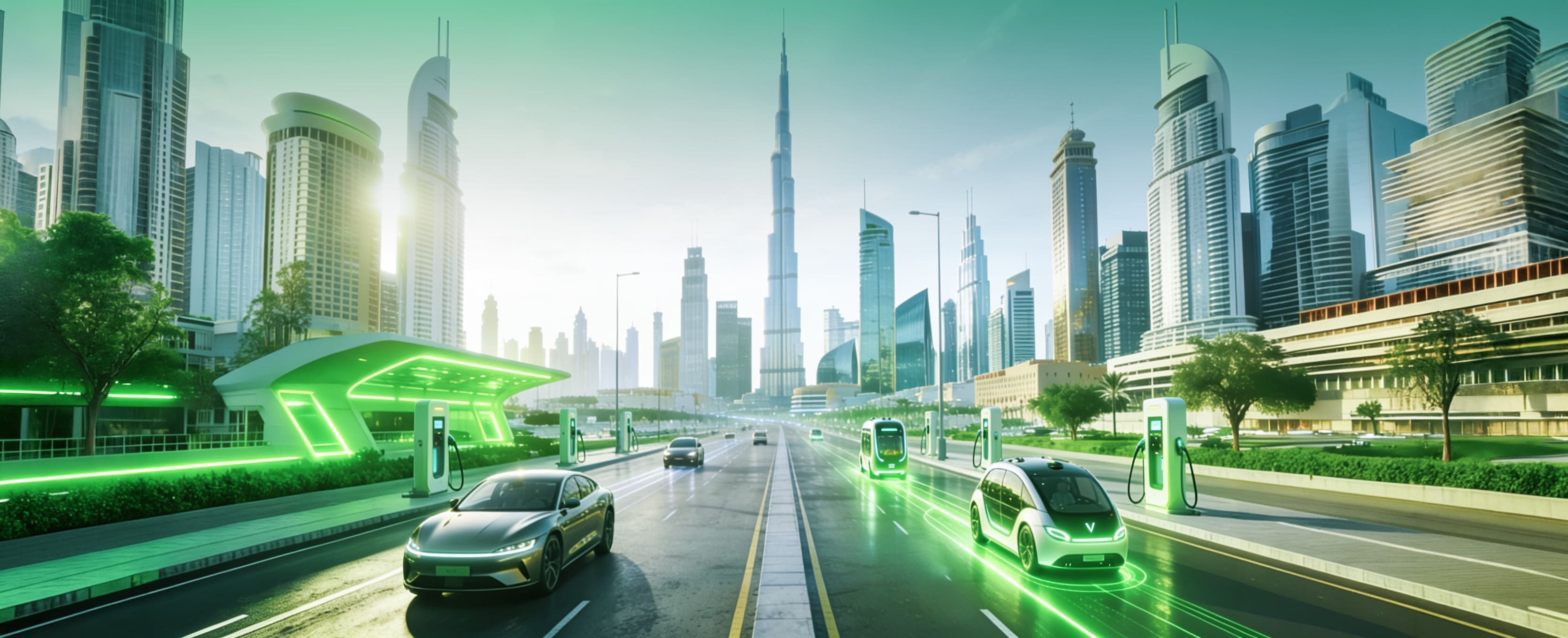
The future of mobility in the UAE is no longer a distant vision, it is happening today. Driven by ambitious sustainability goals, smart city initiatives, and rapid technological innovation, the UAE is positioning itself as one of the world's leading hubs for next-generation transportation.

From electric vehicles (EVs) and autonomous transportation to smart infrastructure and connected mobility ecosystems, the country is creating an environment where innovation and sustainability go hand in hand.


Why the UAE Is Leading the Mobility Transformation

The UAE continues to strengthen its position as a regional leader in sustainable mobility, supported by strong government-led initiatives and infrastructure investment.

For example, the UAE EV market is projected to grow by around 27% annually, reflecting rapid national adoption and policy-driven expansion.

The UAE has placed sustainable development at the center of its long-term national strategies. Through initiatives such as the UAE Net Zero 2050 Strategy and Dubai's Green Mobility Strategy 2030, the nation is accelerating the adoption of clean transportation solutions while reducing dependence on traditional fossil-fuel-powered mobility.

Government support, public-private partnerships, and investment in infrastructure continue to strengthen the country's position as a regional leader in future mobility.


The Rise of Electric Mobility

Electric mobility is becoming a cornerstone of the UAE transportation ecosystem. As charging infrastructure expands and EV ownership becomes increasingly affordable, more consumers and businesses are making the transition to electric transportation.

EV adoption in the UAE is expected to reach 15% of new vehicle sales by 2030, increasing to 25% by 2035, driven by expanding charging networks and affordability improvements.

Several factors are driving this growth:

  • Expanding public charging networks
  • Government incentives and policy support
  • Lower operating and maintenance costs
  • Increased model availability from global manufacturers
  • Growing environmental awareness among consumers

The UAE EV market is expected to experience significant growth over the next decade as both public and private sectors invest heavily in sustainable mobility solutions.


Smart Cities Driving Innovation

Cities such as Dubai are integrating mobility into broader smart city strategies. Intelligent traffic management systems, connected infrastructure, AI-powered transportation services, and data-driven urban planning are transforming how people and goods move across urban environments.

  • Smart mobility solutions offer:
  • Reduced congestion
  • Improved road safety
  • Greater energy efficiency
  • Enhanced user experience
  • Lower carbon emissions

These innovations are creating a seamless mobility ecosystem that supports sustainable urban growth.


Infrastructure as the Foundation of Growth

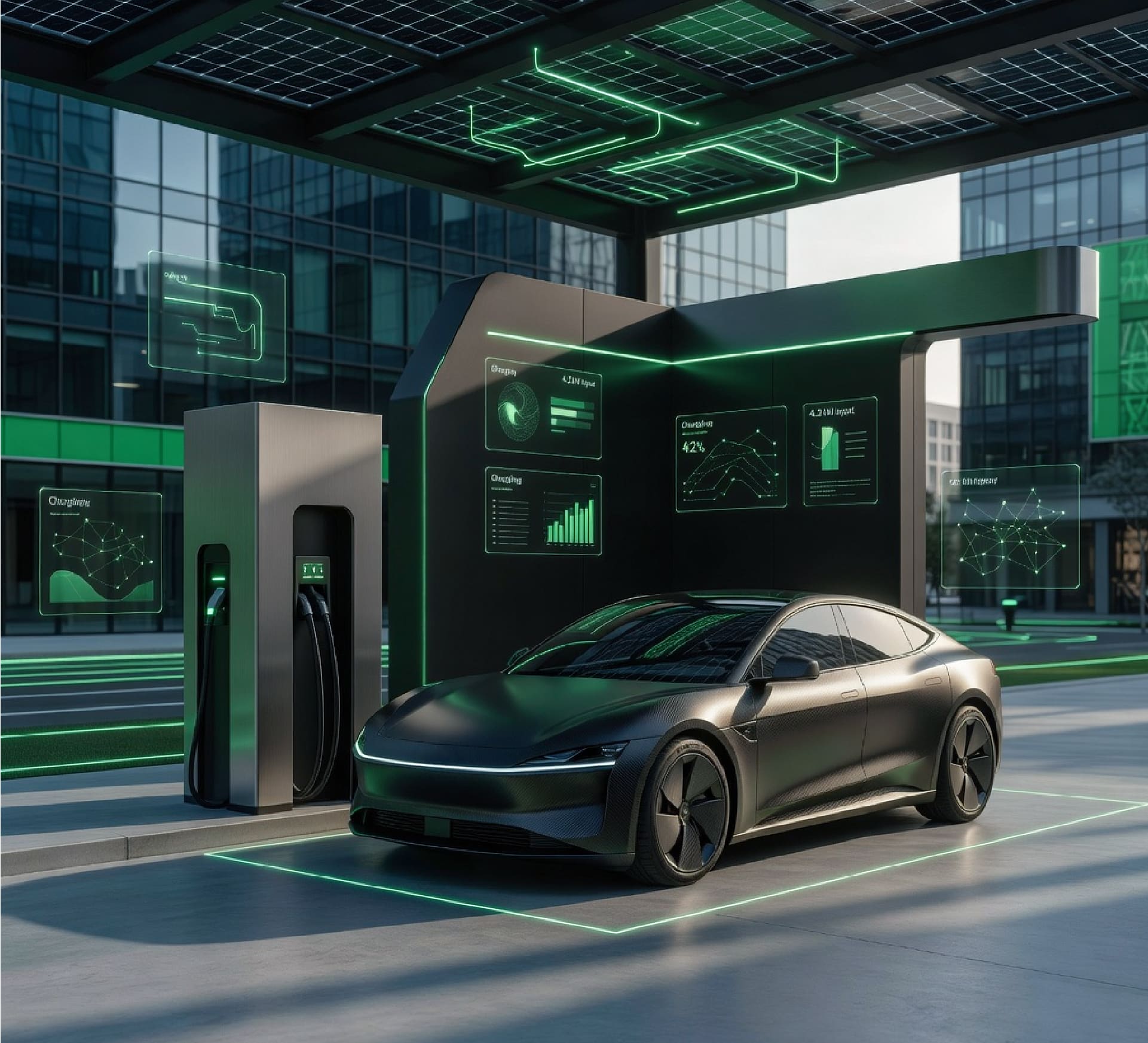
No mobility transformation can succeed without strong infrastructure. Across the UAE, significant investments are being made in EV charging stations, renewable energy integration, smart grids, and intelligent transportation systems.

Dubai’s public charging network is set to grow significantly, with targets to increase infrastructure from 370 chargers in 2023 to over 1,000 by 2025, supporting mass EV adoption.

The rapid expansion of charging infrastructure is helping eliminate one of the main barriers to EV adoption, range anxiety while supporting the growing number of electric vehicles entering the market.


The Role of Technology

Emerging technologies are reshaping the transportation sector faster than ever before.

Key innovations include:

  • Vehicle-to-Grid (V2G) systems
  • Artificial Intelligence (AI)
  • Predictive maintenance solutions
  • Connected vehicle technologies
  • Advanced battery systems
  • Autonomous driving platforms

Together, these technologies are creating a more efficient, connected, and sustainable transportation ecosystem.


Business Opportunities in Future Mobility

The global EV market is expected to approach $1 trillion by 2030, highlighting the massive investment opportunities across the mobility value chain.

The mobility transition is creating new opportunities across the entire value chain.

Opportunities include:

  • EV manufacturing
  • Charging infrastructure
  • Battery technology
  • Energy management solutions
  • Fleet electrification
  • Smart mobility platforms
  • Sustainable transport services

Investors, startups, technology providers, and established mobility companies are increasingly looking to the UAE as a gateway to regional and global growth.


The Future Starts Now

The future of mobility in the UAE is being shaped by innovation, sustainability, and collaboration. As governments, businesses, and technology leaders work together, the country continues to set new benchmarks for clean transportation and smart mobility.

Events such as EV World bring together industry stakeholders, innovators, policymakers, and investors to explore the technologies and partnerships driving this transformation.

The journey toward sustainable transportation has already begun and the UAE is leading the way.

Explore the Future of Mobility at EV World 2026

More To Read

Why the Middle East Is the Next EV Growth Market?
Smart Mobility

19 Jun 2026

Why the Middle East Is the Next EV Growth Market?

The global shift toward electric mobility is creating new growth opportunities across emerging markets, and few regions are moving as rapidly as the Middle East. Supported by ambitious government policies, major investments in infrastructure, and growing consumer demand, the region is becoming an attractive destination for electric vehicle manufacturers, charging providers, battery companies, and mobility innovators.

For companies looking to expand internationally, understanding the opportunities and challenges of the Middle East EV market is essential to building a successful market-entry strategy.


Why the Middle East EV Market Is Growing So Quickly

According to Mordor Intelligence's GCC Electric Vehicle Market Report (2024–2029), the market is projected to grow from USD 3.33 billion in 2024 to USD 9.42 billion by 2029, making it one of the world's fastest-growing electric mobility markets.

Several factors are driving this growth:

  • Government-led sustainability initiatives
  • Net Zero commitments
  • Large-scale infrastructure investments
  • Increasing EV adoption rates
  • Rapid urbanization and smart city development
  • Strong foreign investment in future mobility technologies

Countries such as the UAE and Saudi Arabia are leading this transformation, creating significant opportunities across the entire EV value chain.


Why the UAE Has Become a Gateway for EV Companies

Supported by progressive mobility policies, smart city initiatives, and ongoing investments in sustainable transportation, Dubai continues to strengthen its position as a leading regional hub for future mobility innovation. With a strong focus on electrification, advanced infrastructure, and global connectivity, the city provides an ideal environment for companies seeking to expand across the Middle East and access fast-growing EV markets.

The UAE has positioned itself as one of the region’s leading electric mobility hubs. The country’s strategy includes:

  • National Electric Vehicle Policy
  • UAE Net Zero 2050 Strategy
  • Expansion of charging infrastructure
  • Electrification of public transportation
  • Investment in smart mobility technologies
  • Support for innovation and foreign investment

Dubai, in particular, offers companies direct access to regional markets across the GCC, Africa, and Asia, making it an ideal base for expansion.


Major Opportunities in the Middle East EV Market

Charging Infrastructure

Demand for public and private charging networks continues to grow rapidly, creating opportunities for charging providers, technology companies, and energy suppliers.

Fleet Electrification

Governments and businesses are increasingly transitioning public transportation and commercial fleets to electric vehicles.

Battery and Energy Storage

Growing EV adoption is creating demand for battery technologies, recycling solutions, and energy storage innovations.

Smart Mobility Technologies

Connected mobility, vehicle-to-grid systems, AI-powered fleet management, and digital transportation platforms are becoming critical components of the future mobility ecosystem.

Local Manufacturing and Investment

Governments are investing heavily in local production capabilities and encouraging partnerships with international companies.


Challenges Companies Need to Consider

Despite strong growth potential, entering the Middle East EV market requires careful planning.

Common challenges include:

Understanding Regulatory Frameworks

Policies and incentives vary across countries.

Building Local Partnerships

Success often depends on working with local distributors, government entities, and technology partners.

Infrastructure Readiness

Charging networks continue to expand, but market maturity differs from one country to another.

Market Education

Consumer awareness and adoption rates vary across the region.

Companies that understand these dynamics are better positioned to achieve long-term success.


Why Strategic Partnerships Matter

The future of electric mobility cannot be built by one company alone.

The most successful market entrants are those that develop strong partnerships with:

  • Government entities
  • Fleet operators
  • Energy companies
  • Technology providers
  • Investors
  • Infrastructure developers
  • Mobility innovators

Partnerships accelerate market access, reduce risk, and create new business opportunities.


Why Dubai Is Becoming the Meeting Point for the EV Industry

Dubai has emerged as one of the world's leading destinations for business, innovation, and future mobility.

Its strategic location, advanced infrastructure, and pro-business environment make it the ideal place for companies seeking expansion into the Middle East.

The city increasingly serves as a platform where:

  • Industry leaders connect
  • Investment opportunities emerge
  • New technologies are introduced
  • Strategic partnerships are formed


Discover the Middle East EV Opportunity at EV World 2026

For companies looking to enter or expand within the Middle East electric mobility market, building relationships with the right stakeholders is essential.

EV World 2026 brings together policymakers, investors, manufacturers, infrastructure providers, and technology innovators on one platform dedicated to the future of electric mobility.

Whether you are seeking new customers, strategic partners, or market insights, the event provides direct access to the people and opportunities shaping the next era of transportation.

Join EV World 2026

📍 Dubai World Trade Centre, Dubai, UAE
📅 10–12 November 2026

Exhibit at EV World 2026 and Accelerate Your Market Expansion.

Read More
Designing the Future of Mobility: How the UAE Government Is Leading the Transition
Smart Mobility

26 Jun 2026

Designing the Future of Mobility: How the UAE Government Is Leading the Transition

There is a difference between preparing for the future and designing it. While many countries are still adapting to disruption in transport and mobility, the UAE has positioned itself as a nation actively shaping what comes next through long-term policy, infrastructure investment, technology adoption, and institutional leadership.

Across the country, and particularly in Dubai, government entities are not simply supporting mobility transformation, they are driving it. From electric vehicle adoption and smart infrastructure to autonomous transport and sustainable urban planning, the UAE is building an integrated mobility ecosystem designed for the future.

Policy as the Foundation of Mobility Transformation

At the national level, the UAE’s direction is clearly anchored in long-term sustainability and innovation strategies. The UAE Net Zero 2050 Strategy identifies transport as one of the country’s priority sectors in achieving climate goals while supporting economic diversification and sustainable growth.

In parallel, the National Electric Vehicles Policy is accelerating the transition toward electric mobility by supporting the development of nationwide charging infrastructure, reducing transport sector energy consumption, and improving the EV ownership experience across the UAE.

Key Government Priorities Driving the Transition:

  • Expanding nationwide EV charging infrastructure
  • Reducing transport-related emissions
  • Supporting clean energy and sustainability goals
  • Accelerating electric and hybrid vehicle adoption
  • Building a future-ready smart mobility ecosystem

Dubai has further strengthened this vision through the Dubai Green Mobility Strategy 2030, which aims to reduce transport-related emissions and encourage the adoption of electric and hybrid vehicles. Government procurement policies are also reinforcing this shift, with Dubai entities required to increase annual purchases of electric and hybrid vehicles to 20% from 2025 and 30% from 2030.

These initiatives demonstrate an important reality: mobility transformation does not begin with technology alone. It begins with regulation, long-term planning, and government leadership capable of creating market confidence and accelerating ecosystem growth.

RTA and the Shift Toward Smart & Autonomous Mobility

At the center of Dubai’s mobility transformation is the Roads and Transport Authority (RTA), which has become one of the region’s most influential drivers of smart and sustainable transportation.

Through its Sustainability Framework 2030, RTA is guiding Dubai toward a future of zero-emission public transport by 2050 while investing in climate-resilient and data-driven transport infrastructure. The authority is also leading the development of autonomous mobility solutions through Dubai’s Autonomous Transport Strategy 2030, which targets converting 25% of all trips in Dubai into autonomous journeys by 2030.

Dubai’s Smart Mobility Vision Includes:

  • Zero-emission public transportation by 2050
  • Autonomous mobility integration
  • Smart and data-driven transport systems
  • Digitally enabled public transport services
  • Electrification of taxi and fleet operations

The impact of this transformation is already visible. According to RTA, public transport, shared mobility, and taxis in Dubai served more than 802 million riders in 2025, reflecting growing demand for integrated and digitally enabled transport systems. At the same time, 90% of Dubai’s operational taxi fleet became hybrid or electric in 2025, with a roadmap targeting a fully electric taxi fleet by 2040.

Building the Infrastructure for EV Adoption

Infrastructure development remains one of the most critical factors in accelerating electric mobility adoption, and Dubai has moved aggressively in this area.

Under DEWA’s EV Green Charger initiative, Dubai has rapidly expanded its charging network while establishing a regulatory framework that supports infrastructure growth and accessibility. By 2025, the emirate had surpassed 1,270 EV charging points and more than 40,000 registered electric vehicles, reflecting the market’s accelerating momentum.

Beyond charging stations, DEWA’s broader smart grid strategy is helping create the digital and energy backbone required for a connected mobility ecosystem. Vehicle-to-grid integration, predictive energy management, and intelligent infrastructure are increasingly becoming part of Dubai’s broader smart-city vision.

Infrastructure Developments Supporting EV Growth:

  • Rapid expansion of EV charging stations
  • Smart grid integration and energy management
  • Vehicle-to-grid (V2G) capabilities
  • Improved accessibility for EV users
  • Public-private partnerships accelerating rollout

This approach highlights a key differentiator in the UAE’s strategy: EV infrastructure is not being developed as a standalone utility, but as part of a fully integrated urban mobility and sustainability ecosystem.

Why the UAE Is Becoming a Global Mobility Benchmark

What makes the UAE’s progress particularly significant is that these developments are not future ambitions, they are measurable milestones already shaping the mobility landscape today.

The country has demonstrated that successful mobility transformation depends on more than innovation alone. It requires long-term regulation, infrastructure readiness, institutional coordination, investment confidence, and the willingness to move early.

Why Global Mobility Leaders Are Watching the UAE:

  • Strong government leadership and regulation
  • Rapid infrastructure deployment
  • Advanced smart-city integration
  • Growing EV adoption and market demand
  • Public-private ecosystem collaboration
  • Clear long-term sustainability vision

Mobility Transformation Is Creating New Business Opportunities

As the UAE continues accelerating investment in electric mobility, smart infrastructure, charging networks, autonomous systems, and sustainable transportation, the market is creating significant commercial opportunities across the mobility ecosystem.

This transformation is opening new growth potential for:

  • EV manufacturers and mobility brands
  • Charging infrastructure providers
  • Battery and energy storage companies
  • Fleet and commercial mobility operators
  • Software and smart mobility solution providers
  • Investors, technology innovators, and strategic partners

As governments and cities across the region continue scaling their mobility ambitions, the demand for advanced technologies, infrastructure solutions, and sustainable transport systems is expected to grow rapidly in the coming years.

Explore the Future of Mobility at EV World 2026

As governments, mobility leaders, technology providers, and infrastructure innovators continue shaping the future of transportation, platforms that bring these stakeholders together are becoming more important than ever.

EV World 2026 will serve as a global platform connecting policymakers, industry leaders, investors, and innovators to explore the technologies, partnerships, and strategies driving the future of electric mobility and sustainable transport.

Join EV World 2026 to:

Connect with global mobility leaders and policymakers

  • Discover the latest EV and smart mobility innovations
  • Explore charging infrastructure and sustainable transport solutions
  • Build strategic partnerships across the mobility ecosystem
  • Be part of the conversation shaping the future of transportation

The future of mobility is already being built, and EV World 2026 is where the industry comes together to drive what’s next.

Visit EV World 2026 and explore the next era of electric mobility, smart infrastructure, and sustainable transportation.

Book Your Stand Today.

Read More
Why the UAE Is Becoming the Middle East’s Leading EV Business Hub
Smart Mobility

08 Jul 2026

Why the UAE Is Becoming the Middle East’s Leading EV Business Hub

The electric vehicle industry is entering a new phase in the Middle East. What was once seen as an emerging transport trend is now becoming a serious business opportunity shaped by government policy, infrastructure investment, clean energy goals, and rising demand for smarter mobility solutions.

At the center of this shift is the UAE. With strong national strategies, expanding EV infrastructure, and Dubai’s growing role as a global smart city, the country is positioning itself as one of the region’s leading hubs for electric mobility, sustainable transport, and future ready infrastructure. For mobility stakeholders, the UAE is becoming a strategic gateway to the Middle East’s electric mobility future.

What Makes the UAE an EV Business Hub?

An EV business hub is more than a place where electric vehicles are sold. It is an ecosystem where policy, infrastructure, investment, technology, and market demand come together to support long term industry growth.

In the UAE, this ecosystem is being shaped by several factors, including:

  • Clear national sustainability strategies
  • Government support for EV adoption
  • Expanding EV charging infrastructure
  • Smart mobility and digital transport systems
  • Public private partnerships
  • Growing investment in clean energy and technology
  • Dubai’s role as a regional business and innovation gateway

This combination gives the UAE a strong competitive position. It allows international companies to access a market that is supported by regulation, and infrastructure readiness.

Government Vision Is Driving Market Confidence

One of the UAE’s strongest advantages is that electric mobility is supported by clear government direction. The UAE Net Zero 2050 Strategy identifies transport as one of six priority sectors in the national transition and positions net zero as a driver of economic and societal advancement. The strategy is also expected to create 200,000 job opportunities across the solar, battery, hydrogen subsectors and contribute around 3% to national GDP.

For businesses, this creates confidence. When government strategies are clear, investors and companies can plan with greater certainty. This is especially important in a sector that requires long term investment in infrastructure, technology, fleets, energy systems, and customer adoption.

Dubai’s EV Infrastructure Is Expanding Rapidly

Charging infrastructure is one of the most important foundations of EV market growth. Without reliable charging access, adoption becomes slower for consumers, businesses, and fleet operators.

Dubai has made significant progress in this area. As Dubai Electricity & Water Authority (DEWA) EV Green Charger initiative has also played a key role in supporting Dubai’s EV infrastructure. The initiative helped create the region’s first public charging infrastructure for electric vehicles, with charging locations available through DEWA’s website, smart app, and other digital platforms.

This infrastructure growth is important because it supports fleet electrification, and creates new opportunities for charging operators, energy providers, real estate developers, and technology companies.

The Role of Dubai’s Green Mobility Strategy

Dubai’s Green Mobility Strategy 2030 has helped create a stronger framework for sustainable transport adoption. The strategy supports the use of green mobility solutions to reduce emissions from road transport, while government procurement has been used as a policy tool to accelerate market adoption.

This is a powerful signal to the market, when government entities adopt electric and hybrid vehicles, they help build early demand and encourage wider participation from manufacturers, suppliers, fleet operators, and infrastructure providers.

It also shows that Dubai’s EV progress is not only based on ambition, it’s being supported by practical policy tools that help move the sector from planning to implementation.

The Business Opportunities Behind EV Growth

The UAE EV market is creating opportunities across a much wider ecosystem.

Key growth areas include:

  • EV charging infrastructure
  • Battery innovation and energy storage
  • Fleet electrification
  • Public transport transformation
  • Smart mobility platforms
  • Vehicle financing and leasing
  • EV insurance and warranty solutions
  • Predictive maintenance and telematics
  • Battery recycling and circular economy solutions
  • Connected transport and smart city systems

This is why the UAE is becoming attractive to international exhibitors, investors, and technology providers. The market offers more than consumer demand. It offers a full business environment where mobility, energy, infrastructure, finance, and digital innovation are increasingly connected.

Why Global EV Brands Are Looking at Dubai

Dubai gives global EV businesses something highly valuable: access. The city connects international companies to the UAE, the GCC, the wider Middle East, Africa, and global trade routes. It also offers a business environment built around connectivity, innovation, and major international events.

Dubai’s Clean Energy Strategy further supports this positioning by aiming to produce 100% of Dubai’s energy requirements from clean sources by 2050 and positioning Dubai as a global center of clean energy and green economy. 

For EV companies, this means Dubai serves as a regional base for partnerships, pilot projects, brand visibility, infrastructure development, and market expansion.

How Public Private Collaboration Is Scaling the EV Ecosystem

EV adoption cannot be scaled by one sector alone. It requires collaboration between government entities, utilities, private companies, investors, technology providers, real estate operators, transport authorities, and consumers.

Dubai’s EV ecosystem already reflects this approach. DEWA continues to work with public and private sector partners to expand charging infrastructure, while partnerships with entities are helping extend charging access across parking locations and service stations.

These partnerships are important because they help make EV adoption more practical. They improve accessibility, support customer confidence, and create the infrastructure needed for long term market growth.

EV World 2026: Connecting the Region’s Electric Mobility Ecosystem

As the UAE’s electric mobility ecosystem continues to grow, the need for a dedicated industry platform becomes more important.

EV World 2026 is positioned as the region’s leading platform for electric mobility, smart infrastructure, and sustainable transport innovation. The event brings together EV manufacturers, charging infrastructure providers, battery and energy solution companies, policymakers, investors, technology leaders, fleet operators, and mobility innovators.

EV World serves as a meeting point for the full EV value chain. It connects the companies and institutions shaping the future of mobility across vehicles, infrastructure, energy systems, smart transport, fleet solutions, autonomous technologies, and future mobility models.

For international exhibitors and partners, the exhibition offers a timely opportunity to engage with one of the region’s most dynamic EV markets and connect directly with the stakeholders driving the next phase of growth.

The Future of EV Growth in the UAE

The UAE is positioning itself as the Middle East’s leading EV business hub by treating electric mobility as a strategic engine for national growth. Its progress is being shaped by the convergence of sustainability, infrastructure development, investment momentum, technological innovation, and economic diversification.

Dubai’s progress demonstrates how markets can scale when long-term vision is supported by clear policy, enabling regulation, future ready infrastructure, and effective public private collaboration. As EV adoption continues to accelerate, the UAE is increasingly positioned to become a regional hub for electric mobility companies, investors, and innovators seeking to expand across the Middle East and beyond.

The future of mobility is being shaped today, and the UAE is building the infrastructure, partnerships, and innovation platform to lead it.

Explore the Future of Mobility at EV World 2026.


Read More