EV Insights & Industry Updates
Stay informed with the latest trends, innovations, market insights, and policy developments shaping the future of electric vehicles, charging infrastructure, sustainable mobility, and smart transportation across the UAE, Middle East, and global markets.

Featured Article
11 Jun 2026
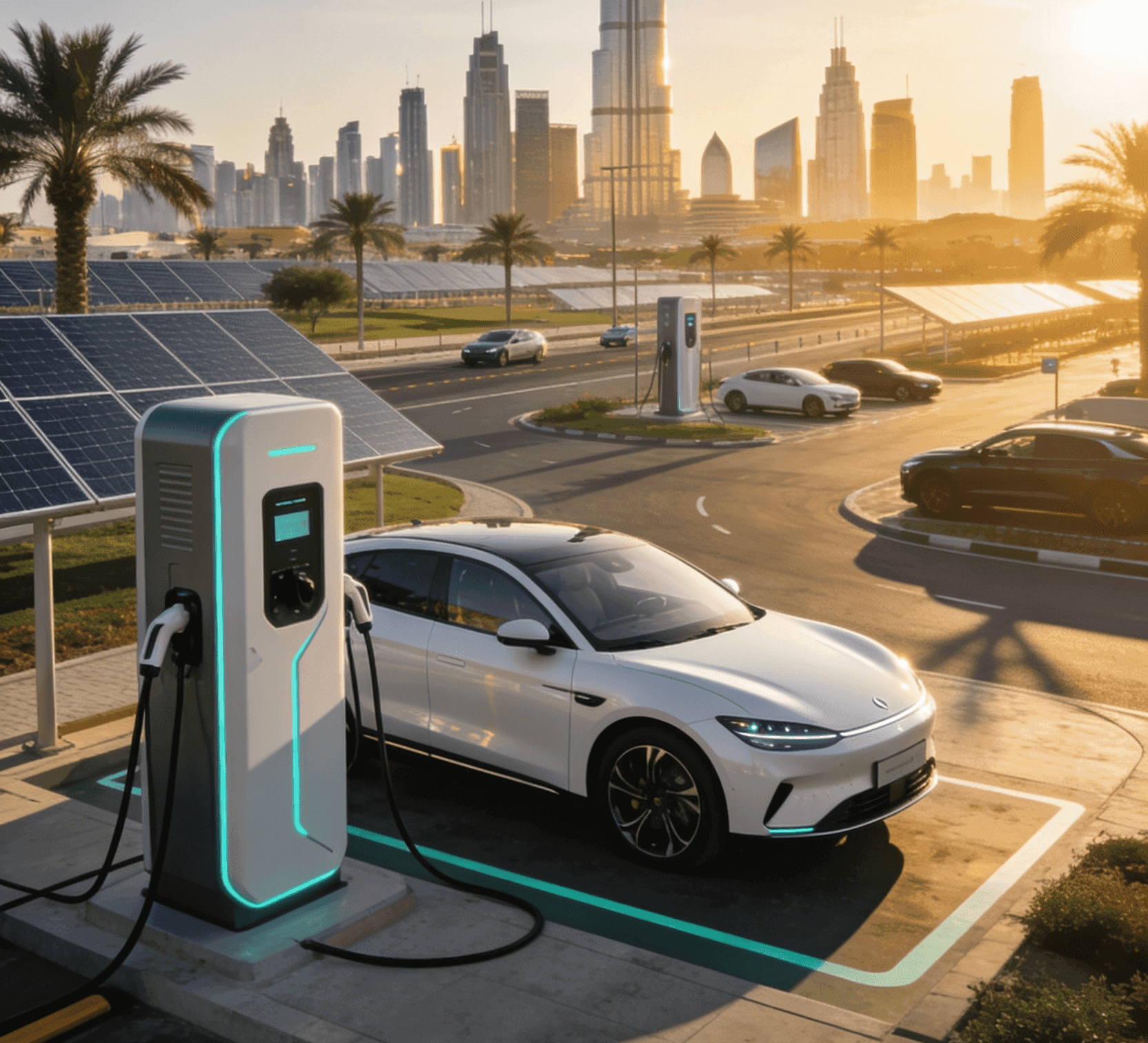
Why Electric Mobility Is Reshaping Transportation?
Transportation is undergoing one of the most significant transformations in modern history. At the center of this shift is electric mobility, a movement that is redefining how people, businesses, and cities approach transportation.
As governments pursue sustainability goals and consumers demand cleaner alternatives, electric mobility is rapidly becoming the foundation of future transportation systems.
What Is Electric Mobility?
Electric mobility refers to transportation solutions powered primarily by electricity rather than traditional fossil fuels.
This includes:
- Electric passenger vehicles
- Commercial electric fleets
- Electric buses
- E-bikes and scooters
- Smart charging infrastructure
- Connected mobility systems
Together, these technologies contribute to a cleaner, more efficient transportation ecosystem.
The Key Drivers Behind Electric Mobility Growth
Several global trends are accelerating electric mobility adoption.
Sustainability Goals
Countries worldwide are implementing policies aimed at reducing emissions and supporting climate commitments. Electric vehicles play a critical role in achieving these objectives.
Battery Innovation
Advancements in battery technology continue to improve vehicle range, charging speed, performance, and affordability.
Infrastructure Expansion
The rapid deployment of public and private charging stations is making EV ownership increasingly convenient for consumers and businesses.
Government Incentives
Financial incentives, tax benefits, and supportive regulations are encouraging both consumers and fleet operators to transition to electric transportation.
Benefits of Electric Mobility
Reduced Emissions
Electric vehicles help reduce greenhouse gas emissions and improve air quality in urban environments.
Lower Operating Costs
EVs typically require less maintenance and offer lower energy costs compared to conventional vehicles.
Energy Efficiency
Electric drivetrains convert energy more efficiently than internal combustion engines, resulting in improved overall performance.
Improved User Experience
Modern EVs offer advanced digital features, connectivity, and smart mobility capabilities that enhance convenience and safety.
How Electric Mobility Is Transforming Industries
The impact of electric mobility extends far beyond vehicle manufacturers.
Industries benefiting from this transformation include:
- Energy providers
- Charging infrastructure companies
- Battery manufacturers
- Software developers
- Fleet operators
- Insurance providers
- Smart city developers
This growing ecosystem is creating new business models and investment opportunities around the world.
The Role of Smart Mobility
Electric mobility and smart mobility are increasingly interconnected.
Technologies such as AI, telematics, predictive maintenance, and vehicle-to-grid systems enable transportation networks to become more intelligent, efficient, and responsive.
As cities evolve, these integrated solutions will play a vital role in shaping future transportation systems.
The Road Ahead
Electric mobility is no longer an emerging trend—it is becoming the new standard for transportation.
As innovation continues to accelerate, the industry will see further advancements in battery technology, charging infrastructure, connected mobility, and autonomous transportation solutions.
Organizations that embrace these changes today will be best positioned to thrive in the future mobility landscape.
EV World serves as a platform where industry leaders, innovators, investors, and policymakers come together to explore the trends shaping the future of electric mobility and sustainable transportation.
Explore the Future of Mobility at EV World 2026
Latest Articles

16 Oct 2026
Why EV Brands Are Securing Their Space for EV World 2026
With less than four weeks to go, the EV World 2026 floor plan is filling up fast. Exhibition space is being allocated quickly across every sector, and the most visible locations are going first.
Here is why companies across the mobility value chain are not waiting.
1. The market is moving now, not next year
Dubai passed 40,000 registered EVs and 1,270 public charging points by 2025, according to DEWA. Electric and hybrid vehicles make up 20% of government fleet purchases from 2025, rising to 30% from 2030. Procurement decisions linked to these targets are being made today. Brands that are visible now are the ones on the shortlist.
2. The right people will be in one place for three days
EV World brings government authorities, OEMs, battery and charging leaders, fleet buyers, investors and startups to Dubai World Trade Centre from 10 to 12 November. Meeting this audience one by one would take months of travel and introductions. At EV World, it takes three days.
3. Your competitors are already booked
The exhibitor line-up is growing across all eight sectors, from Electric Vehicles and Batteries & Storage to Marine and Air Mobility. If your category is on the floor and you are not, buyers will meet your competitor first.
4. A platform with government backing
EV World 2026 is held under the patronage of H.H. Sheikh Hamdan bin Mohammed bin Rashid Al Maktoum, Crown Prince of Dubai, Deputy Prime Minister and Minister of Defence of the UAE and chairman of the Executive Council of Dubai. the Roads and Transport Authority (RTA) organise the EV world for the First time.
5. Early bookers get the best positions
Stands are allocated by sector zone, and the corner, entrance-facing and conference-adjacent spaces always go first. Booking now also gives your team time to design the stand, plan launches, book B2B and B2G meetings and invite clients.
Secure your space before the floor plan closes.
Book Your Stand Now.
Read More
24 Sept 2026
EV WORLD 2026 | EXHIBITOR SPOTLIGHT
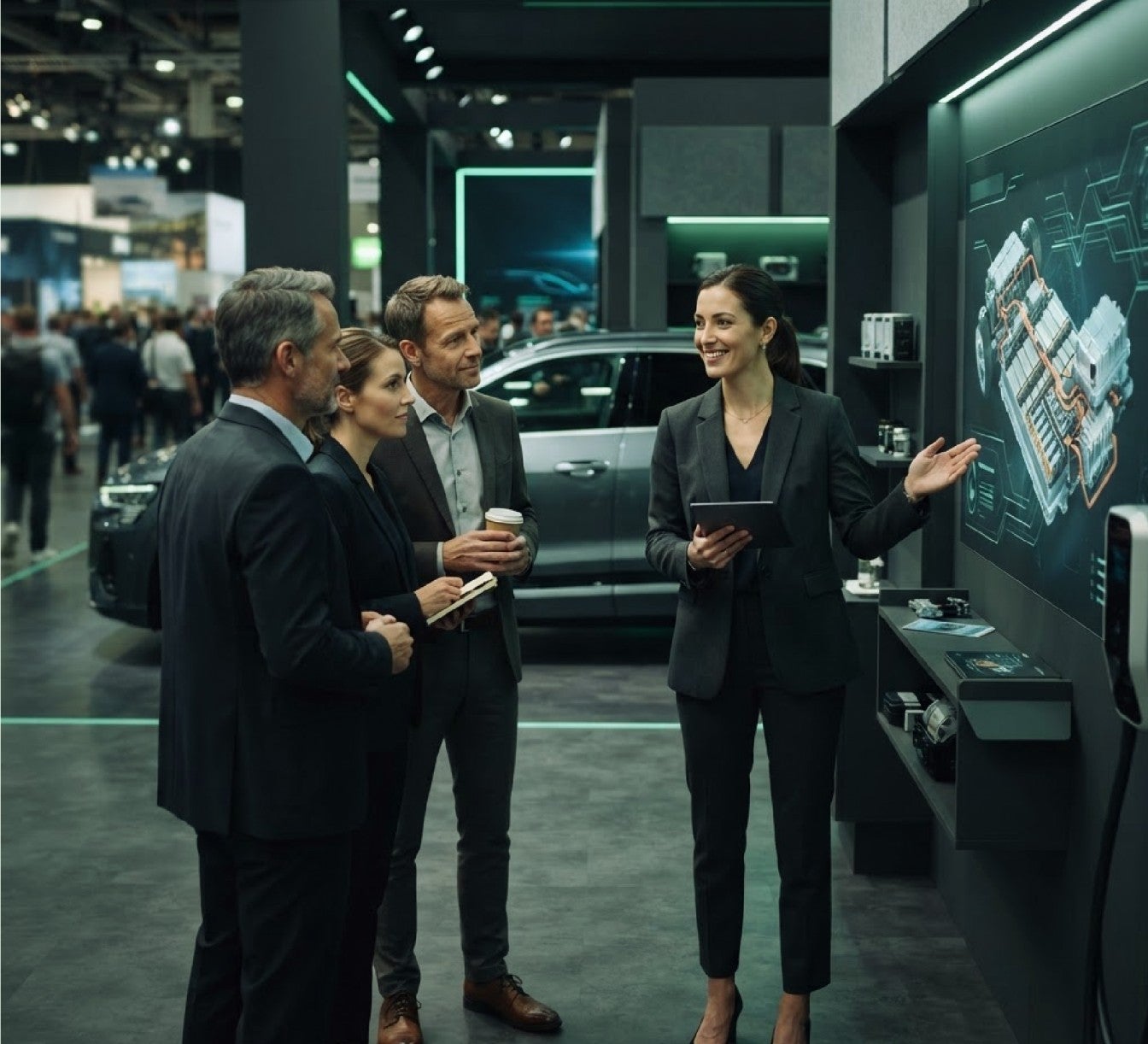
Meet the First Exhibitors Confirmed for EV World 2026
ELEKEY and ecoRide join Dubai’s new platform for the future of electric mobility
The future of mobility is being shaped by more than electric vehicles alone. It is being driven by the energy systems that power them, the charging infrastructure that supports them, the technologies that make them smarter and the partnerships that turn innovation into real-world solutions.
From 10–12 November 2026, EV World 2026 will bring the electric mobility ecosystem together at Dubai World Trade Centre, connecting businesses, technology providers, industry leaders, policymakers, investors and mobility professionals under one platform.
We are pleased to welcome ELEKEY and ecoRide among the first exhibitors confirmed for EV World 2026, with more leading brands and organisations to be announced in the lead-up to the event.
Meet ELEKEY and ecoRide
Every exhibitor brings a different perspective to the evolution of electric mobility. The participation of ELEKEY and ecoRide reflects the breadth of technologies, solutions and ideas that will be showcased at EV World 2026.
ELEKEY – “Your Way to Energy”
ELEKEY’s participation brings the energy dimension of electric mobility into focus. As EV adoption expands, the systems supporting electric mobility — from energy solutions to the infrastructure that enables everyday use — become increasingly important.
At EV World 2026, visitors will have the opportunity to discover ELEKEY and explore its contribution to the wider electric mobility ecosystem.
ecoRide – “Smarter Electric Journeys”
ecoRide joins EV World with its focus on smarter electric journeys, highlighting how electric mobility is transforming the way people move.
Its participation adds another perspective to the evolving mobility landscape and demonstrates the diversity of solutions being developed across the sector.
More exhibitor spotlights will follow as the EV World 2026 community continues to grow.
Why the Full EV Ecosystem Matters
Electric mobility is often represented by the vehicle itself. However, every electric journey depends on a much wider ecosystem.
Batteries influence performance and usability. Charging infrastructure determines accessibility and convenience. Energy systems support the growing demand for electrification. Software and digital technologies are transforming how vehicles and infrastructure operate, while investment, policy and partnerships help turn innovation into scalable solutions.
EV World 2026 is designed to bring these interconnected elements together.
Visitors will be able to explore developments across vehicles, batteries, charging, energy, software, infrastructure and future mobility, gaining a broader perspective of how these technologies connect and contribute to the next generation of transportation.
For businesses, this creates opportunities to identify technologies, solutions and potential partners. For professionals and newcomers to the sector, it provides a platform to better understand the rapidly evolving electric mobility ecosystem.
See the Technology. Experience the Possibilities.
An exhibition offers something that announcements and product descriptions cannot — the opportunity to see innovation up close, interact with technologies and engage directly with the people developing them.
At EV World 2026, visitors can expect to discover vehicles, products, technologies, live demonstrations and interactive experiences across the exhibition floor.
Test drives will provide an opportunity to experience electric mobility beyond a static display, while demonstrations and face-to-face discussions will allow visitors to understand how new solutions work in real-world applications.
Whether you arrive looking for a specific technology, exploring business opportunities or simply want to understand what is next in electric mobility, EV World 2026 will offer multiple ways to discover, experience and connect.
Connections That Can Move Ideas Forward
The transition to electric mobility involves an increasingly diverse network of stakeholders.
Manufacturers, technology companies, fleet operators, investors, buyers, government representatives and policymakers all play a role in shaping how electric mobility develops and scales.
Bringing these communities together is at the heart of EV World.
Beyond the exhibition floor, the event will provide opportunities to meet industry professionals, decision-makers, investors, government representatives and technology leaders — creating an environment where conversations can develop into partnerships and new opportunities.
A conversation that begins around a product or technology can lead to discussions around infrastructure, investment, policy or collaboration.
By bringing the wider value chain together, EV World creates the environment for those connections to happen.
A Conference Shaped Around the Sector’s Priorities
The EV World conference will complement the exhibition with discussions structured around four key pillars:
Policy | Infrastructure | Innovation | Investment
Policy will examine the role of government direction, regulation and alignment in supporting the development of electric mobility.
Infrastructure will explore charging networks, energy systems and connected cities that enable electric mobility to become part of everyday life.
Innovation will focus on autonomous, digital and clean mobility technologies shaping the next generation of transportation.
Investment will examine the partnerships, resources and investment required to turn promising technologies into scalable projects and market-ready solutions.
Together, these four pillars connect the technologies showcased on the exhibition floor with the policies, investments and partnerships that will influence what happens next.
Dubai: A Meeting Place for Future Mobility
EV World 2026 will take place in Dubai, bringing together companies, industry leaders and professionals focused on the next stage of electric mobility.
Delivered in strategic alignment with Dubai’s Roads and Transport Authority, the event connects government direction with the technologies, infrastructure and partnerships required to advance sustainable mobility.
This provides EV World with a platform where technology, business and policy conversations can come together.
For visitors, Dubai will provide three days of exhibitions, experiences, demonstrations and industry conversations.
For exhibitors, it offers an opportunity to showcase their solutions within an event dedicated to the wider electric mobility ecosystem.
More Exhibitors to Be Announced
ELEKEY and ecoRide are among the first exhibitors confirmed for EV World 2026, marking the beginning of a growing community of companies and organisations contributing to the future of electric mobility.
More exhibitors, technologies and industry participants will be announced in the coming weeks as the event lineup continues to develop.
Meet ELEKEY, ecoRide and the growing EV World community from 10–12 November 2026 at Dubai World Trade Centre.
Explore the technologies. Experience electric mobility. Connect with the people shaping what comes next.
Register to visit EV World 2026 and follow us for more exhibitor announcements.
Read More
21 Sept 2026
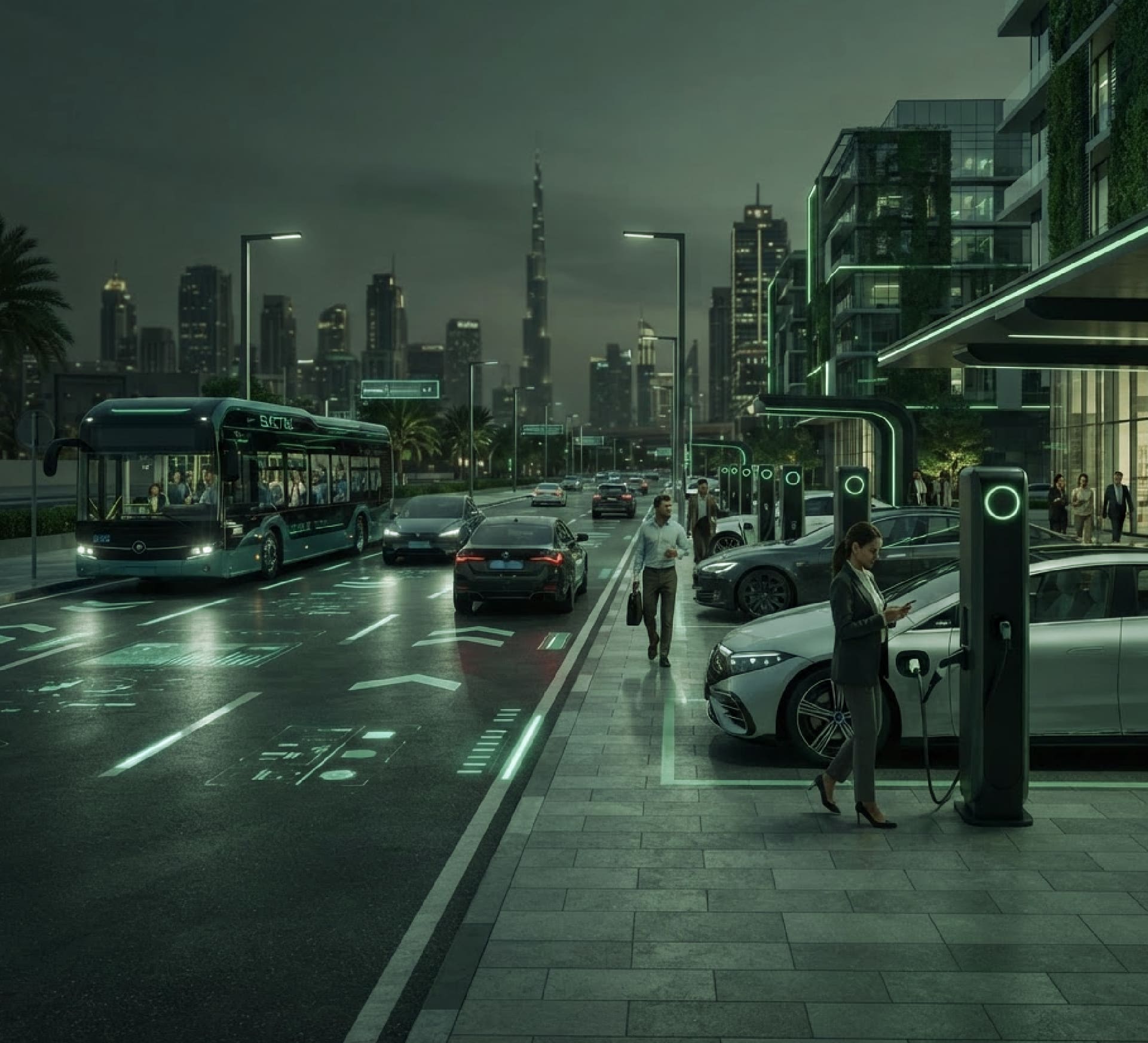
How UAE Government Policies Are Accelerating Future Mobility Investment
A strategic look at how policy, infrastructure, regulation and public-sector demand are shaping an investable mobility ecosystem in the UAE.
The future of mobility will not be shaped by technology alone. It will also be shaped by the markets capable of giving that technology somewhere to operate, scale, attract capital and become commercially viable.
Across the UAE, government policy is increasingly playing that role. From national electric vehicle targets and charging infrastructure regulation to autonomous vehicle frameworks, public fleet electrification and dedicated mobility investment clusters, the UAE is creating an environment designed to move future mobility technologies from concept to commercial deployment.
For investors, manufacturers, infrastructure providers, technology companies and mobility operators, this matters. Clear policy reduces uncertainty. Infrastructure creates demand. Regulation makes commercial deployment possible. Public-sector commitments can provide early market scale.
Together, these factors are helping turn the UAE into one of the region’s active markets for electric, connected and autonomous mobility.
From Sustainability Ambition to Market Direction
The UAE’s mobility transformation sits within a broader national transition toward a low-carbon economy.
The National Electric Vehicles Policy provides one of the clearest signals of this direction. It establishes a framework for cooperation between federal entities, local governments and the private sector, while supporting the development of a nationwide EV charging network and regulation of the country’s electric vehicle market.
The UAE’s wider ambition is significant: increase the share of electric vehicles to 50% of vehicles on the country’s roads by 2050.
This type of long-term target does more than establish an environmental objective. It creates visibility for the market. Automotive manufacturers can evaluate future demand. Charging companies can model infrastructure requirements. Fleet operators can plan transitions. Energy companies can anticipate new electricity demand. Real estate developers can integrate charging into future developments.
For investors, the importance is not simply the target itself. It is the ecosystem that must be built to achieve it.
Charging Infrastructure Is Becoming an Investable Market
An EV market cannot scale without charging infrastructure. The UAE has therefore moved beyond encouraging charger deployment and toward establishing the regulatory and commercial foundations required for a functioning charging industry.
The government-backed UAEV network was established to expand fast and accessible charging infrastructure across the country. At the national level, the Ministry of Energy and Infrastructure has stated an ambition to increase the total number of EV charging points across the UAE to approximately 10,000 by 2030 and 30,000 by 2050.
Importantly, policy is also addressing the economics behind those networks. Standardised national EV charging tariffs came into effect in 2025, creating greater pricing transparency for charging services and helping establish clearer commercial conditions for operators and investors.
Dubai offers a clear example of how this market is developing. By the end of 2025, Dubai had 47,944 electric vehicles, an increase of 27.9% compared with the previous year. By January 2026, the city’s charging network had expanded to more than 1,860 charging points, including infrastructure developed with public and private-sector partners.
DEWA has also established a regulatory framework for independent charge point operators, creating a formal pathway for private companies to develop and operate EV charging infrastructure in Dubai.
This is a critical transition. The charging sector is evolving from primarily government-led infrastructure development toward a broader commercial ecosystem involving utilities, charging operators, parking companies, fuel retailers, property owners, fleet operators and technology providers.
The opportunity therefore extends well beyond charger hardware. Investment opportunities include:
- Fast and ultra-fast charging networks
- Fleet charging and depot infrastructure
- Charging software and payment platforms
- Energy management systems
- Smart-grid integration
- Charging hardware and maintenance
- Destination charging
- Commercial property infrastructure
- Battery storage and renewable-energy integration
As EV adoption increases, charging becomes infrastructure rather than simply an automotive service.
Government Procurement Is Helping Create Early Demand
One of the strongest tools governments can use to accelerate an emerging industry is procurement.
Dubai has progressively introduced targets for government entities purchasing electric and hybrid vehicles. Government procurement targets increased to 20% of annual vehicle purchases from 2025, with a further increase to 30% expected from 2030.
Dubai’s Roads and Transport Authority is pursuing an even broader decarbonisation programme. Its Zero-Emissions Public Transportation strategy targets the conversion of 30% of taxis and limousines to electric or hydrogen vehicles by 2030, rising to 100% by 2040. For public buses, the strategy targets 10% electric or hydrogen vehicles by 2030 and full conversion by 2050.
These commitments create something particularly valuable for mobility companies: anchor demand. Large fleet transitions can support investment in vehicle supply, charging depots, maintenance infrastructure, fleet software, battery management, energy systems and financing solutions.
They can also provide manufacturers and technology providers with large-scale reference projects that can support expansion into other regional markets.
These developments are creating a convergence between policy, technology and commercial opportunity — precisely the ecosystem that EV World 2026 is designed to bring together.
Regulation Is Becoming a Competitive Advantage in Autonomous Mobility
Future mobility is not limited to electrification. Autonomous transportation is becoming another area where the UAE is using policy as an economic development tool.
Dubai’s Self-Driving Transport Strategy aims to make 25% of mobility journeys autonomous by 2030. That target is now moving from strategy into real-world deployment.
Dubai has developed partnerships with international autonomous driving companies and expanded Robotaxi operations. By August 2026, Robotaxi operations had recorded more than 4 million kilometres of travel, while the operational fleet had reached 144 vehicles.
Abu Dhabi has taken another significant step. In November 2025, it announced the start of commercial operations for fully driverless Level 4 autonomous vehicles, supported by regulatory and operational frameworks developed with federal and local authorities.
This includes the Autonomous Vehicles Integrated Testing, Operations and Management System, AViTOMS, designed to manage autonomous vehicle registration, permitting, testing, supervision and commercial operation through a centralised system.
In July 2026, Abu Dhabi also inaugurated a dedicated central control room for autonomous vehicle operations and introduced dedicated licence plates for trial and commercial autonomous vehicles.
These measures illustrate an important shift in the role of government. Regulators are not simply asking whether autonomous vehicles should eventually be permitted. They are building the regulatory architecture needed for companies to test, certify, operate and scale them.
For autonomous mobility companies evaluating global expansion, regulatory readiness can be as important as technological readiness. A market that provides structured testing environments, clear licensing pathways and access to real-world operations can provide a platform for deployment and scale.
Abu Dhabi Is Building an Industrial Ecosystem Around Future Mobility
Government policy is also moving beyond mobility adoption toward industry creation.
Abu Dhabi’s Smart and Autonomous Vehicle Industries, SAVI, cluster was created as a dedicated ecosystem for developing smart and autonomous mobility technologies across land, sea and air. The cluster brings together R&D, testing, manufacturing, commercial deployment and investment within an enabling regulatory environment.
Recent government projections indicate that SAVI could contribute around AED 44 billion to Abu Dhabi’s GDP and create up to 40,000 jobs by 2045.
Its importance lies in the model. Rather than competing only to become a large consumer of future mobility technology, Abu Dhabi is positioning itself as a location where those technologies can be developed, tested, manufactured and commercialised.
For international companies, this creates potential opportunities not only to serve the UAE market, but also to establish regional R&D, testing, manufacturing and technology operations.
The value chain includes:
- Vehicle manufacturing and assembly — regional production, localisation and supply-chain capabilities
- Artificial intelligence and autonomous systems — AI, sensors, computer vision, mapping, data platforms and high-performance computing
- Testing and certification — including dedicated infrastructure for validating autonomous driving technologies
- Advanced air mobility — electric vertical take-off and landing aircraft, smart charging infrastructure and potential vertiport development
- Autonomous logistics — self-driving trucks, delivery technologies, drones and intelligent logistics systems
- Marine mobility — autonomous and electric maritime systems
This multi-modal approach is particularly significant. The next mobility market will not be defined by one vehicle category. It will connect automotive technology, aviation, logistics, maritime transport, AI, infrastructure, energy and urban planning.
Policy Is Creating a Platform for Private Capital
The most significant impact of these government initiatives may ultimately be their ability to reduce barriers to private investment.
Future mobility projects face several common challenges. Technology can be expensive. Infrastructure requires significant upfront capital. Regulatory approval can take years. New mobility services require access to public infrastructure. Demand can be difficult to predict.
The UAE’s policy approach addresses several of these risks simultaneously:
- Long-term targets create demand visibility.
- Public procurement helps establish early customers.
- Charging regulations create commercial rules.
- Testing frameworks reduce regulatory uncertainty.
- Government partnerships provide access to real-world operating environments.
- Industrial clusters connect companies with infrastructure, investors, talent and government stakeholders.
The result is an increasingly investable ecosystem for future mobility technologies, infrastructure and services.
Why UAE, Why Now?
The UAE’s mobility opportunity is being shaped by the combination of:
- Clear long-term EV and future mobility targets
- Expanding charging infrastructure
- Government-backed fleet electrification
- Emerging autonomous mobility regulations and real-world deployment
- Dedicated mobility technology and industrial clusters
- Growing public-private collaboration
- A regional platform for companies developing, testing, deploying and scaling future mobility solutions
Where the Next Investment Opportunities Could Emerge
Charging and Energy Infrastructure
EV adoption will require significantly greater charging capacity, alongside faster charging, smarter energy management and stronger grid integration.
Commercial and Heavy-Duty Fleets
Taxis, logistics fleets, buses, delivery vehicles and corporate fleets offer opportunities for electrification at scale.
Autonomous Mobility
Robotaxis, autonomous buses, self-driving logistics vehicles and supporting software represent a rapidly developing market.
Batteries and Energy Storage
Battery technology, recycling, lifecycle management, second-life applications and energy storage will become increasingly important as EV penetration rises.
Mobility Software and AI
Future transportation requires far more than vehicles. Fleet management, predictive maintenance, autonomous systems, digital twins, mapping, cybersecurity and mobility platforms will become core components of the ecosystem.
Advanced Air and Marine Mobility
Electric aviation, autonomous vessels and next-generation urban mobility systems could open entirely new transport categories.
Manufacturing and Localisation
As the market grows, regional manufacturing, component production, assembly and supply-chain localisation could become increasingly attractive.
From Mobility Market to Global Testbed
What distinguishes the UAE is not one individual policy. It is the combination of policy, regulation, infrastructure, investment and real-world implementation.
Electric vehicles are increasing on UAE roads. Charging infrastructure is expanding. Private charging operators are entering the market. Autonomous vehicles are moving from controlled tests toward commercial operation. Public fleets have defined decarbonisation targets. Dedicated industrial clusters are attracting international mobility companies, and regulatory frameworks are being developed for technologies that, in many markets, remain largely experimental.
This creates an important proposition for global companies. The UAE is not only seeking to adopt the future of mobility. It is creating an environment in which that future can be tested, financed, deployed and scaled.
EV World 2026: Where Policy, Technology and Investment Connect
As this transformation accelerates, collaboration between government, industry, investors and technology providers will become increasingly important.
EV World 2026 brings that ecosystem together. Taking place from 10 to 12 November 2026 at Dubai World Trade Centre, EV World connects EV manufacturers, charging and infrastructure providers, battery and energy companies, autonomous technology innovators, policymakers, investors, fleet operators and industry leaders.
The platform spans the wider future mobility ecosystem, including electric vehicles, charging infrastructure, batteries and storage, autonomous technologies, smart mobility software, fleet and commercial mobility, marine transportation and advanced air mobility.
As UAE policy continues to create new pathways for investment and deployment, the opportunity for industry is becoming clearer. The transition to future mobility is no longer only a long-term vision. It is becoming an increasingly investable market, and the UAE is building the ecosystem to accelerate it.
BE PART OF THE FUTURE MOBILITY ECOSYSTEM
Meet policymakers, investors, manufacturers, infrastructure providers, technology companies, fleet operators and mobility leaders shaping the next generation of mobility at EV World 2026.
10–12 November 2026 | Dubai World Trade Centre
Exhibit. Connect. Invest. Shape What Moves Next.
Read More
08 Sept 2026
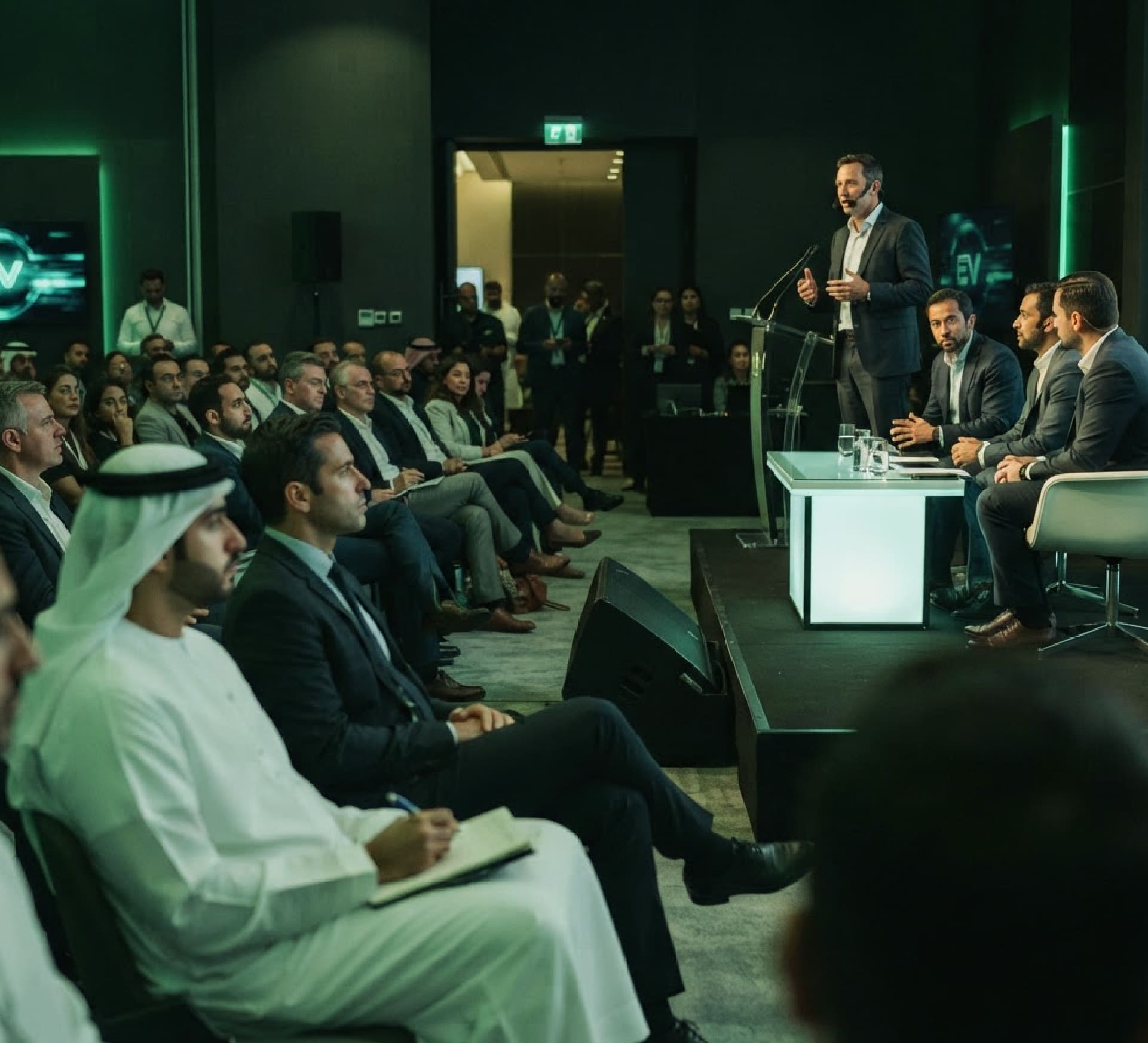
EV World 2026 Reveals Global Speakers Shaping the Future of Electric Mobility
Executives from PwC, HSBC, KPMG, BEEAH Group, and more than 70 industry leaders confirmed to address the strategies accelerating the transition toward smarter transportation in Dubai
Electric Vehicles Exhibition and Conference 2026 (EV World) takes place from 10–12 November 2026 at Dubai World Trade Centre, organized in strategic partnership with Dubai’s Roads and Transport Authority (RTA), under the theme “Driving a Smart and Sustainable Mobility Future.” Ahead of the show, EV World is revealing the first names on a speaker roster expected to exceed 70 industry leaders, alongside more than 300 exhibiting companies and 30 business partners.
The future of mobility is being shaped by collaboration between governments, technology innovators, automotive leaders, energy companies, and infrastructure providers. EV World 2026 brings these voices together through keynote sessions, strategic discussions, and expert conversations exploring the trends, technologies, and opportunities driving the global transition toward sustainable transportation.
Meet the Speakers
Electric mobility has evolved beyond vehicle manufacturing into a connected ecosystem spanning renewable energy, charging infrastructure, artificial intelligence, autonomous technology, and smart cities. The first confirmed speakers for EV World 2026 include:
- Mozah Alnuaimi, Assistant Undersecretary for Electricity, Water and Future Energy, UAE Ministry of Energy and Infrastructure
- Heiko Seitz, Global and Middle East eMobility Leader and Partner, PwC
- Jennifer Chammas, Managing Director of Sustainable Finance, HSBC
- Morsi Berguiga, Partner, KPMG
- Daker El Rabaya, CEO of Waste Processing, Treatment and Disposal, BEEAH Group
- Abdul Karim Sawan, CEO, Esyasoft e-Mobility
- Benjamin Zhai, CEO, Robo.ai Inc.
- Salah Yamout, Chief Transformation Officer, Mohamed Yousuf Naghi Motors
- Azfar Shakeel, CEO, Lumi
- Poorvak Kapoor, Vice President of Technology, Euler Motors
- Marcus Brunner, Chief Commercial Director for Energy Storage Systems, XCHARGE Europe
Together, this line-up connects policy with implementation, investment with infrastructure, and innovation with scalable market opportunity, with more speakers to be announced ahead of the show.
What the Agenda Will Cover
Across the three-day program, sessions will examine Dubai’s transition toward zero-emission public transport, the integration of electric mobility into MENA’s smart cities, fleet electrification economics, GCC policy frameworks, sustainable finance, clean grid charging, and workforce readiness.
The agenda also explores the electrification of ports, logistics, and heavy industry, alongside emerging opportunities in autonomous systems and advanced air mobility — giving attendees a view across the full value chain, from vehicle markets and charging infrastructure to connected technology and battery lifecycle management.
Dubai: A Strategic Hub for Future Mobility Innovation
Dubai continues to strengthen its position as a global destination for innovation, technology, and sustainable development. Hosting EV World 2026 places the city at the meeting point of global expertise and regional ambition, creating opportunities for collaboration between international organizations, government entities, investors, and technology providers.
Why This Matters
The transition to electric mobility is one of the biggest transformations in the transportation industry, and achieving widespread adoption requires cooperation across sectors. For attendees, EV World 2026 is an opportunity to:
- Hear directly from the policymakers, financiers, and operators shaping the region’s mobility transition
- Track which technologies and business models will define the industry’s next phase
- Connect with decision-makers across OEMs, energy, finance, and technology
- Explore new business, investment, and partnership opportunities across the mobility value chain
Join EV World 2026
With more than 70 speakers, over 300 exhibiting companies, and 10,000+ specialist visitors expected in Dubai this November, EV World 2026 is shaping up to be the region’s most connected platform for the future of electric mobility.
Discover the speakers, explore the agenda, and register your participation at EV World 2026.
Read More

31 Aug 2026
Visitor Registration Is Now Open for EV World 2026
Your Journey Into the Future of Mobility Starts Here
For the first time, visitor registration for EV World 2026 is officially open.
From 10 to 12 November 2026, Dubai World Trade Centre will bring together the technologies, businesses, innovators and people shaping the future of electric and sustainable mobility.
Discover the latest developments across:
- Electric vehicles
- Charging infrastructure
- Battery technologies
- Energy solutions
- Autonomous systems
- Smart mobility platforms
- Future transportation technologies
Whether you are a business professional looking to build new connections or a mobility enthusiast ready to experience the latest innovations, EV World offers an experience designed around your interests.
Choose your registration category and be part of the future of mobility.
Choose Your EV World Experience
EV World 2026 offers two visitor registration categories: Business Visitor and Visitor, each providing an event experience designed around different interests and objectives.
Business Visitor
Access Hours: 10:00 AM – 6:00 PM
Designed for professionals, decision-makers and organizations actively contributing to the development of electric and sustainable mobility.
Ideal for:
- Industry professionals
- Government representatives
- Fleet operators
- Investors
- OEMs and manufacturers
- Dealers and distributors
- Consultants
- Energy and utility companies
- Technology providers
What can Business Visitors experience?
Connect with global exhibitors, discover new technologies and explore opportunities across the evolving mobility ecosystem.
Business Visitors can also participate in:
- B2B matchmaking
- Business networking
- Industry-focused sessions
- Product demonstrations
- Partnership discussions
Whether you are looking for new suppliers, technologies, investments or strategic partnerships, EV World provides an environment designed to support meaningful business connections.
Connect. Discover. Partner. Grow.
Visitor
Access Hours: 3:00 PM – 10:00 PM
Curious about the future of mobility? The Visitor category opens EV World to the wider community and everyone interested in discovering how electric and smart mobility is changing the way we travel.
Perfect for:
- EV buyers
- General visitors
- Students
- Families
- EV enthusiasts
- Test drive participants
Discover. Experience. Explore.
Get closer to the latest electric vehicle models, meet leading EV brands and explore the technologies transforming transportation.
Visitors can experience:
- The latest EV models
- Charging technologies
- Future mobility innovations
- Consumer activities
- Product showcases
- Selected test-drive experiences
This is your opportunity to see—and experience—the future of mobility.
Why Visit EV World 2026?
Discover
Explore the latest technologies and innovations transforming mobility.
Connect
Meet businesses, innovators, technology providers and industry professionals.
Experience
See new vehicles and technologies up close and participate in selected live experiences.
Learn
Gain insights into the trends and technologies shaping the future of transportation.
Explore Opportunities
Discover new business partnerships, technologies and investment opportunities.
More Than an EV Exhibition
EV World is designed as a comprehensive platform connecting the entire future mobility ecosystem.
Across three days, explore developments in:
- Electric Vehicles
- Charging Infrastructure
- Batteries & Energy Storage
- Autonomous Technologies
- Fleet & Commercial Mobility
- Smart Mobility Software
- Marine Mobility
- Air Mobility
The event will also feature:
- Live demonstrations
- Future mobility showcases
- Product and technology launches
- Technical sessions
- Startup innovations
- Business networking
- Government and industry engagement
For business leaders, EV World is a place to connect, collaborate and discover new opportunities.
For general visitors, it is an opportunity to experience what the future of transportation could look like.
Secure Your Access to EV World 2026
Visitor registration is now open.
Whether you are coming to build business relationships, explore investment opportunities, discover new technologies or experience the next generation of mobility, your EV World journey starts here.
10–12 November 2026
Dubai World Trade Centre
Be Part of the Future of Mobility
Choose the registration category that best matches your interests and secure your access today.
[ REGISTER NOW]
Read More
25 Aug 2026
How Smart Mobility Is Transforming Business Across the Middle East
Smart Cities Are Becoming Connected Mobility Ecosystems
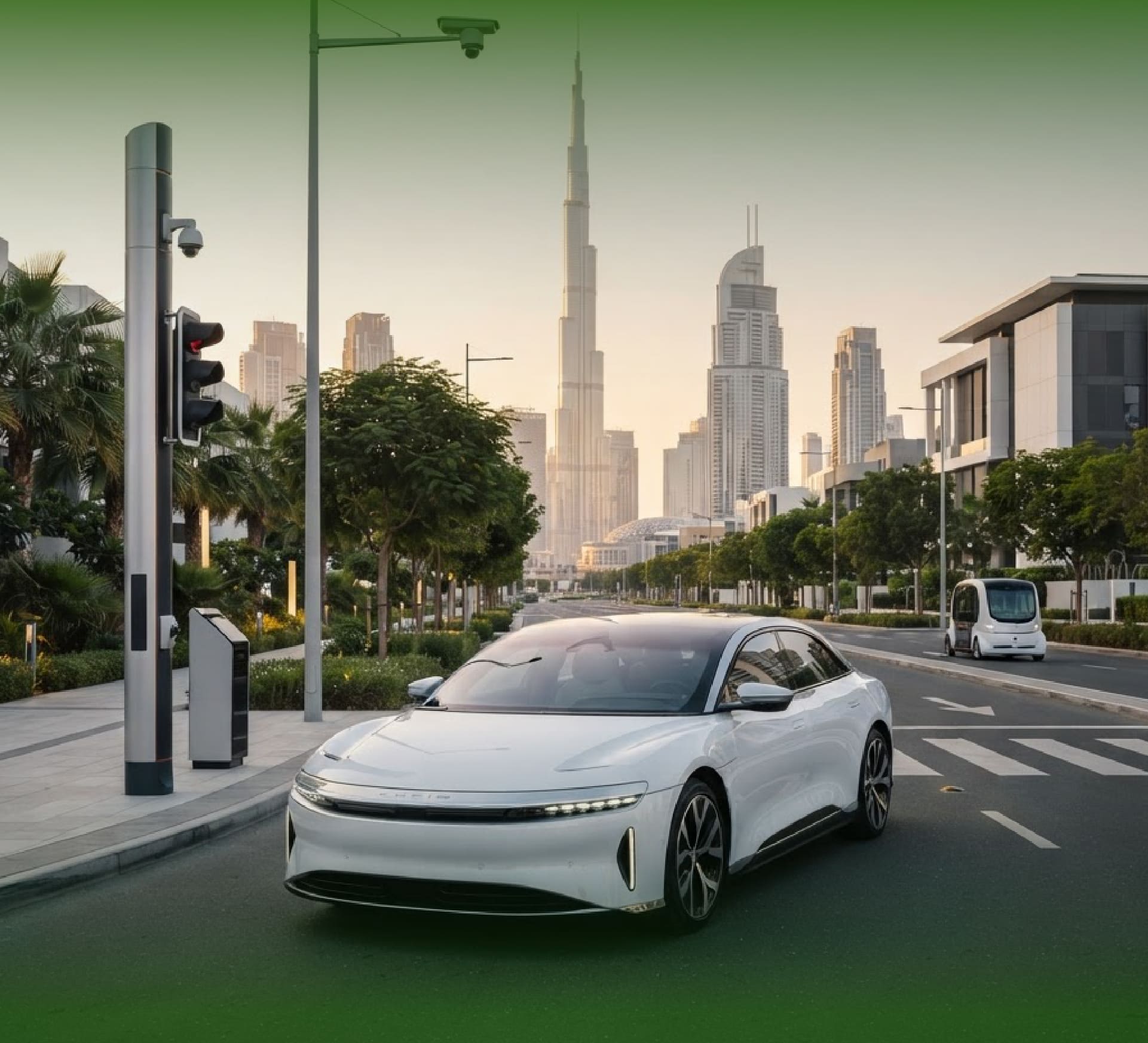
The development of smart cities across the Middle East is changing the way transportation, infrastructure and urban services are designed.
Instead of treating roads, vehicles, public transport, parking and pedestrian infrastructure as separate systems, cities are increasingly connecting them through shared data, digital platforms and intelligent infrastructure.
Sensors can monitor traffic flows. Connected vehicles can communicate with infrastructure. AI platforms can analyse real-time conditions and optimize traffic management. Mobility applications can combine multiple modes of transport into a single customer journey.
Dubai provides a clear example of this direction. The Roads and Transport Authority’s Self-Driving Transport Strategy targets converting 25% of transportation trips in Dubai into smart and driverless journeys by 2030.
For businesses, this represents more than a transportation transformation. It creates opportunities for companies providing software, connectivity, sensors, cybersecurity, mapping, payments, fleet management, data analytics, infrastructure and mobility services.
The smart city of the future will therefore depend not only on physical infrastructure, but on the digital ecosystem connecting everything together.
AI Is Becoming the Intelligence Layer of Transportation
Artificial intelligence is becoming one of the foundations of future transportation.
AI-powered systems can analyse large volumes of mobility data to identify congestion patterns, predict demand, optimize routes, manage fleets and improve infrastructure performance.
For businesses, the implications are substantial.
A logistics company can use predictive intelligence to improve delivery schedules. Fleet operators can anticipate maintenance requirements before failures occur. Transport authorities can dynamically manage traffic. Mobility platforms can use real-time data to deliver more personalized journeys.
Dubai’s RTA has already formalized this direction through its AI Strategy 2030, which includes 81 projects and initiatives across areas including seamless mobility, intelligent traffic management and asset excellence.
As AI becomes increasingly embedded into transportation infrastructure, competitive advantage will depend not simply on collecting data, but on the ability to turn mobility data into decisions, efficiency and new business opportunities.
IoT Is Connecting the Physical and Digital City
If AI provides intelligence, the Internet of Things provides connectivity.
IoT-enabled cameras, roadside sensors, charging infrastructure, connected vehicles, parking systems and smart traffic signals can continuously generate information about how a city is moving.
Combined with 5G, cloud computing and edge technologies, these systems create the digital foundation for connected mobility.
For technology providers, this creates opportunities across telecommunications, cybersecurity, cloud infrastructure, sensors, mapping, payments, fleet management and urban analytics.
The future mobility market is therefore not simply a vehicle market. It is an interconnected technology stack spanning connectivity, data, infrastructure, software, energy, payments, cybersecurity and intelligent transportation systems.
Autonomous Mobility Is Moving From Pilot to Operation
Perhaps the most visible demonstration of regional mobility innovation is the accelerating development of autonomous transportation.
In November 2025, Abu Dhabi announced the commercial operation of fully driverless Level 4 vehicles, described by the emirate as the first commercial deployment of its kind in the MENA region. Abu Dhabi Mobility also introduced a digital platform capable of monitoring autonomous vehicle movements and operations in real time.
Dubai followed with further progress in February 2026, when official operations of fully autonomous RT6 taxi vehicles developed by Baidu Apollo Go were launched as part of the emirate’s smart mobility ecosystem.
These developments signal an important transition: autonomous mobility in the Middle East is moving beyond demonstration projects towards commercial ecosystems.
For businesses, this transition changes the opportunity significantly. It creates demand not only for autonomous vehicles, but also for fleet platforms, sensors, mapping, connectivity, safety systems, charging infrastructure, data platforms, cybersecurity and operational services.
Expert Perspective: Regulation and Innovation Must Move Together
Technology alone will not determine how quickly autonomous mobility scales.
Dr Abdulla Hamad AlGhfeli, Acting Director General of Abu Dhabi Mobility’s Integrated Transport Centre, described the emirate’s autonomous vehicle authorization as a “strategic milestone” for smart and sustainable mobility. His wider comments emphasized the importance of regulatory and operational frameworks alongside technology deployment.
That balance will define the next stage of mobility innovation.
The cities that succeed will not simply deploy the most advanced vehicles. They will build environments where transport authorities, technology companies, infrastructure operators and investors can innovate within secure, interoperable and commercially viable frameworks.
Mobility-as-a-Service Is Creating New Business Models
Another major opportunity is Mobility-as-a-Service (MaaS). Rather than consumers managing separate applications for metro services, buses, taxis, micromobility, parking and potentially autonomous vehicles, MaaS platforms can bring multiple transport options together through one digital interface.
The result is a shift from vehicle ownership towards access, integration and convenience.
For businesses, MaaS creates opportunities in digital payments, subscription models, customer analytics, multimodal journey planning and personalized mobility services.
It also creates a valuable new commodity: data. Aggregated mobility information can help authorities understand infrastructure demand, enable developers to make better location decisions and help businesses understand how customers and employees move through cities.
Where the Business Opportunities Are Emerging
Technology & Digital Infrastructure
Companies providing AI, cloud platforms, IoT, cybersecurity, connectivity, mapping and data analytics are becoming essential components of the mobility ecosystem.
Charging & Energy
The expansion of electric mobility is creating demand for charging infrastructure, energy management, battery technologies and integrated power solutions.
Fleet & Logistics
Connected fleet platforms, predictive maintenance, route optimization and electrification are helping businesses improve efficiency while reducing operational costs.
Real Estate & Smart Cities
Developers are increasingly considering mobility connectivity, EV charging, public transport access and intelligent infrastructure when designing communities and commercial destinations.
Tourism & Retail
Connected mobility can create smoother visitor journeys and provide businesses with better insight into how customers move through cities and destinations.
Investment & Partnerships
As new technologies and business models emerge, smart mobility is creating opportunities for investors, technology companies, infrastructure providers and strategic partners to enter new markets.
The result is a mobility economy that connects multiple industries—and creates opportunities for businesses that may never have considered themselves part of the transportation sector.
Smart Mobility Is Becoming a Business Growth Platform
The commercial impact of smart mobility reaches across sectors.
Retailers can use mobility patterns to understand customer flows. Real estate developers can design connected communities around multimodal transport. Tourism operators can create frictionless visitor journeys. Logistics companies can optimize fleets using predictive intelligence. Governments can use transportation data to make better infrastructure investments.
This is why the Smart Mobility Middle East opportunity should be viewed as an ecosystem rather than a standalone transport sector.
The convergence of EVs, autonomous systems, AI, IoT, data platforms and smart infrastructure is creating a new arena for collaboration—and companies that enter this ecosystem early can help define the technologies, standards and commercial models that shape it.
EV World 2026: Where the Future Mobility Ecosystem Connects
As smart mobility accelerates across the Middle East, businesses need platforms where technology, investment, infrastructure, government and commercial opportunity can come together.
EV World 2026 is designed to provide that platform.
Bringing together mobility innovators, governments, investors, infrastructure providers, technology companies, fleet operators and solution providers, EV World creates opportunities to explore the technologies and partnerships shaping the next generation of transportation.
From electric vehicles and charging infrastructure to autonomous mobility, AI, IoT, connected infrastructure, intelligent transport systems and digital mobility platforms, the event provides a meeting point for the wider mobility ecosystem.
For exhibitors and partners, the opportunity goes beyond showcasing products.
It is an opportunity to build relationships, identify customers and partners, explore new markets, engage with decision-makers and position your organization within the region’s rapidly developing mobility ecosystem.
The Future of Mobility Is Being Built Now
The future of mobility in the Middle East will not be shaped by one technology or one organization.
It will be created through an ecosystem where vehicles, infrastructure, energy, intelligence, investment and policy move together.
For businesses, the opportunity is not simply to observe this transformation—but to participate in it.
Position your organization at the centre of the Middle East’s next mobility transformation.
Explore Exhibition & Partnership Opportunities at EV World 2026
10–12 November 2026 | Dubai World Trade Centre
ENQUIRE ABOUT EXHIBITING: Book Your Space at EV World 2026
Read More
20 Aug 2026
Why Charging Infrastructure Is Driving the Next Wave of EV Growth in MENA
The transition to electric mobility across the Middle East and North Africa is moving from ambition to infrastructure. As EV adoption accelerates, the availability of reliable, accessible and intelligent charging is becoming one of the most important factors shaping consumer confidence, fleet electrification and long-term market growth. This shift will be on full display at EV World 2026 in Dubai this November.
The MENA electric mobility market is projected to grow from USD 3.33 billion in 2024 to USD 9.42 billion by 2029, representing a CAGR of 23.2%, according to Middle East Energy's Battery and eMobility Integration Report. This expansion is being supported by government strategies, growing investment, improving vehicle affordability and the rapid development of charging infrastructure.
Charging Infrastructure: The Foundation of EV Adoption
For EV adoption to move beyond early adopters, drivers need confidence that charging will be available when and where they need it. This makes infrastructure more than a supporting service, it is a core component of the EV ecosystem.
Across the region, public and private charging networks are expanding in residential communities, commercial destinations, workplaces, parking facilities and highways. Dubai, for example, has significantly increased its charging capacity. By January 2026, DEWA reported more than 1,860 EV charging points across Dubai, including points delivered through collaboration with government and private-sector partners.
Saudi Arabia is also developing a nationwide fast-charging network. EVIQ, a joint venture between the Public Investment Fund and Saudi Electricity Company, is targeting more than 5,000 fast chargers across 1,000 strategic locations by 2030.
These developments demonstrate the scale of opportunity emerging for charging technology companies, utilities, network operators and infrastructure developers.
Fast Charging Is Changing the Ownership Experience
One of the biggest barriers to EV adoption is charging time. Fast and ultra-fast charging technologies are therefore becoming central to the next generation of EV charging stations across the UAE and wider EV infrastructure strategies across the Middle East.
High-power DC charging can significantly reduce charging time, making EVs more practical for consumers, commercial fleets, taxis and long-distance travel. Saudi Arabia's deployment of highway fast-charging stations illustrates this shift, with EVIQ expanding infrastructure beyond urban centers to support longer journeys.
The future, however, is not simply about installing more chargers. Operators will need to consider charger reliability, interoperability, digital payment, real-time availability, maintenance and intelligent energy management.
From Charging Stations to Smart Charging Networks
As charging networks grow, the infrastructure itself is becoming more connected.
Smart charging enables operators and energy providers to manage when and how vehicles draw electricity, helping balance demand and improve network efficiency. Connected charging platforms can also provide users with real-time information, digital payment options and charger availability.
The next step is Vehicle-to-Grid (V2G) technology, which can allow compatible EVs to return electricity to the grid during periods of high demand. This creates a two-way relationship between vehicles and the energy system, positioning EVs as potential energy assets rather than simply consumers of electricity.
Dubai is already exploring this direction. Its mobility ecosystem includes smart-grid integration and V2G capabilities, while DEWA has continued researching advanced charging technologies including ultra-fast, mobile and inductive charging.
Government Policy Is Accelerating Investment
Government strategies are playing a critical role in creating the conditions required for infrastructure investment.
Across MENA, EV development is increasingly connected to broader objectives around sustainability, energy diversification, smart cities and economic development. The UAE's national strategy targets 50% of all vehicles on the country's roads being electric by 2050, while Dubai's Green Mobility Strategy 2030 is supporting the expansion of clean transportation and charging infrastructure.
Saudi Arabia is similarly using Vision 2030 to encourage sustainable transport and build the infrastructure required for wider EV adoption. EVIQ's partnerships with municipalities and private-sector organizations demonstrate how public-private collaboration can accelerate deployment at scale.
For infrastructure providers, this policy momentum creates opportunities across equipment supply, network operation, energy management, software, installation, maintenance and integrated mobility solutions.
Renewable Energy Will Shape the Next Charging Ecosystem
The future of EV charging is also closely connected to the future of energy.
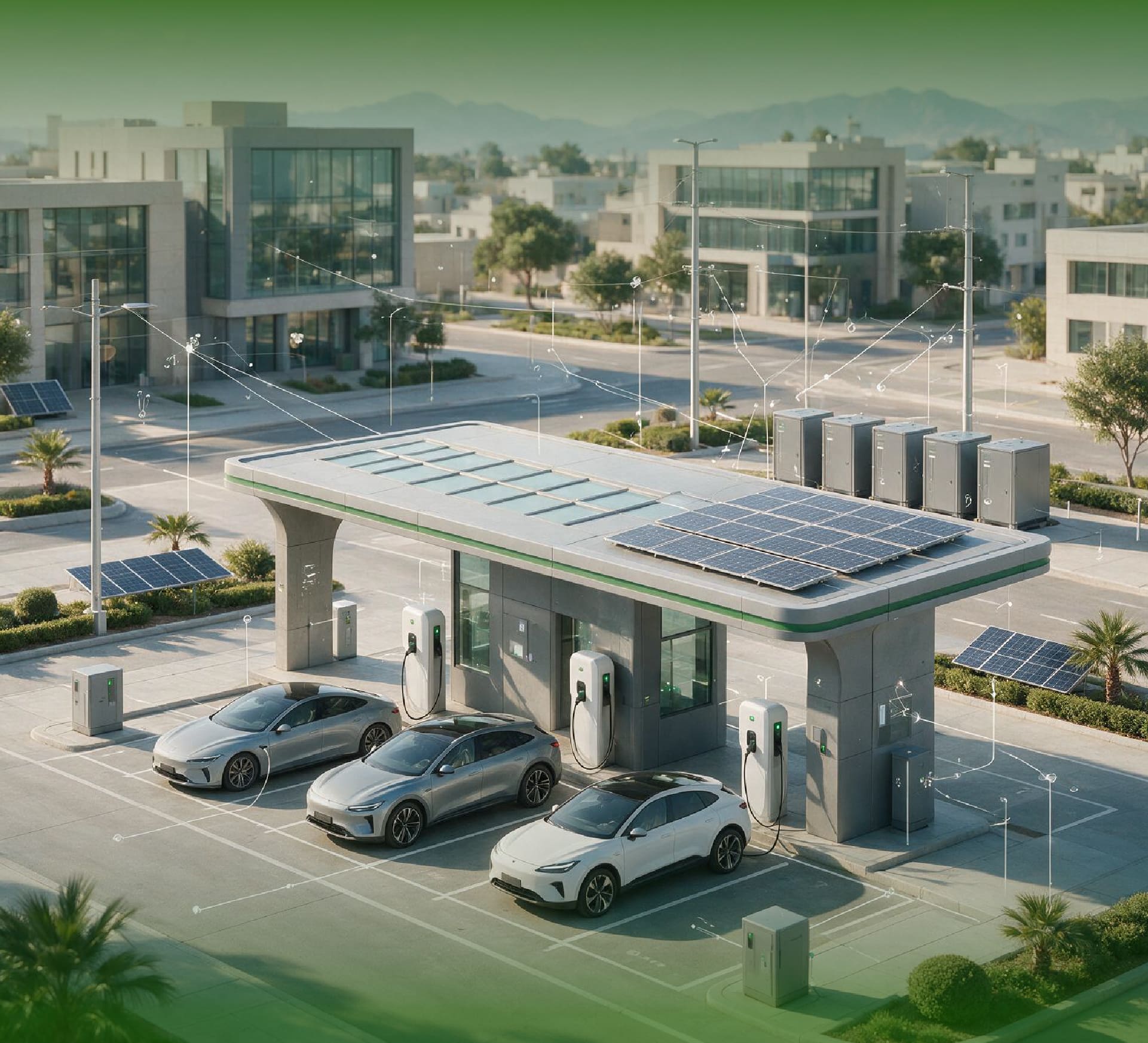
Integrating charging infrastructure with renewable energy sources such as solar can support cleaner mobility while helping optimize electricity consumption. In a region with significant solar potential, this creates opportunities for charging hubs that combine renewable generation, energy storage, smart charging and digital energy management.
This convergence is transforming charging stations into components of a broader smart-energy ecosystem.
The Business Opportunity for Infrastructure Providers
The expansion of EV charging infrastructure across MENA is creating opportunities across the entire value chain.
Charging solution providers can support:
- Public and highway charging networks
- Residential and workplace charging
- Fleet and depot charging
- Fast and ultra-fast charging
- Charging management software
- Energy storage and renewable integration
- Smart charging and V2G
- Charger maintenance and predictive diagnostics
- Digital payment and mobility platforms
The opportunity is particularly significant because EV adoption requires collaboration. OEMs need charging partners. Utilities need technology providers. Governments need infrastructure developers. Investors need scalable business models. Fleet operators need reliable charging solutions.
This is why the next phase of EV growth will be shaped not only by vehicle manufacturers, but by the companies building the infrastructure behind them.
A Human-Centered View: Building Confidence, Not Just Chargers
From an industry perspective, the challenge is ultimately about the user experience. As EVIQ CEO Mohammed Bakr Gazzaz noted, reliable charging infrastructure is essential to giving EV drivers confidence and making electric mobility practical at scale. EVIQ's approach combines network expansion with strategic partnerships, highway deployment and charger testing to improve reliability and compatibility.
For drivers, the question is simple: Can I charge easily, reliably and when I need to?
For businesses, the question is broader: Can the infrastructure scale with demand while remaining commercially and operationally sustainable?
Answering both questions will determine how quickly EV adoption moves into the mainstream.
Building the Future at EV World 2026
The next wave of electric mobility in MENA will require stronger connections between technology, energy, infrastructure and investment.
EV World 2026 brings these stakeholders together in Dubai, connecting global innovators, policymakers and investors while showcasing technologies shaping the future of electric mobility and smart infrastructure.
Taking place 10–12 November 2026 at Dubai World Trade Centre, EV World expects 300+ global and local exhibitors, 10,000+ visitors and 70+ speakers, creating a high-value environment for business development, knowledge exchange and strategic partnerships.
For charging solution providers, energy companies, utilities, network operators and smart infrastructure innovators, EV World offers an opportunity to showcase solutions and connect directly with government entities, fleet managers, vehicle manufacturers, investors, energy professionals and technology developers.
The future of EV adoption will be powered by the infrastructure built today.
Book Your Space
10–12 November 2026 | Dubai World Trade Centre, Dubai, UAE
evworld.ae/register-interest?attend=exhibitor
Read More

04 Aug 2026
Why Mobility Sponsorships Are Creating New Business Opportunities in the EV Sector
In today's electric mobility market, success depends on more than innovative technology. Companies need visibility among the right stakeholders, access to decision makers, and partnerships that accelerate market growth. This is why sponsorship has become a strategic business investment rather than simply a marketing activity.
As the global EV market continues to expand, brands are looking for access: access to decision makers, regulators, investors, buyers, fleet operators, technology partners, and government stakeholders who can influence market entry, partnership development, and long-term business growth.
This is where EV sponsorship opportunities are becoming increasingly valuable. In a sector defined by fast moving technology, policy led transformation, and cross sector collaboration, sponsorship is no longer simply a branding exercise. It is a strategic business tool that can support credibility, relationship-building, lead generation, thought leadership, and market positioning. For leaders, the value of sponsorship lies in one central question: who does it allow your brand to reach, influence, and build with?
Why Sponsorship Matters in a Fast-Growing EV Industry
The global EV industry is entering a decisive phase. According to the International Energy Agency (IEA), electric car sales exceeded 20 million globally in 2025, with one in four new cars sold worldwide being electric. Electric cars are also expected to represent around 28% of global new car sales in 2026.
This growth is creating a wider business opportunity across charging infrastructure, batteries, smart mobility software, fleet electrification, financing, insurance, renewable energy integration, and public transport transformation.
As the industry expands, competition for relevance is increasing. Brands need more than advertising visibility; they need trusted platforms where they can demonstrate leadership, build relationships, and connect with stakeholders who are actively shaping purchasing, investment, and policy decisions. For sponsors, this reinforces an important point: high value business connections are built through direct engagement, not passive exposure.
Brand Visibility That Builds Market Credibility
In the EV industry, visibility carries strategic weight. Companies operating in electric mobility are often selling solutions that require trust, technical confidence, regulatory understanding, and long-term partnerships. Sponsorship allows brands to be seen not only as participants in the market, but as active contributors to its growth.
For technology companies, visibility supports credibility in a competitive innovation landscape. For energy companies, it reinforces commitment to the transition toward cleaner transport. For financial institutions, it highlights involvement in sustainable investment and green finance. For government partners, it demonstrates leadership in advancing future mobility and sustainable transportation.
Effective sponsorship positioning enables brands to align themselves with the strategic conversations defining the future mobility landscape, including infrastructure readiness, fleet transformation, charging network expansion, policy development, investment momentum, and smart mobility adoption.
Thought Leadership That Positions Brands at the Center of Industry Growth
Sponsorship also creates space for thought leadership. In a market where many companies are competing on technology, pricing, or infrastructure capability, the ability to shape the conversation can become a powerful differentiator.
This is especially relevant in electric mobility, where the most important questions are not only about product features. They are about adoption models, public private collaboration, energy integration, fleet economics, financing structures, consumer confidence, and regulatory readiness.
Sponsors that contribute to these discussions through panels, executive sessions, interviews, whitepapers, workshops, or strategic showcases can position themselves as industry leaders rather than only solution providers. This kind of presence can influence how government stakeholders, investors, buyers, and partners perceive a company’s role in the future mobility ecosystem.
From Executive Access to Strategic Partnerships
In the EV sector, meaningful access often means connecting with C-level executives, regulators, government entities, fleet owners, infrastructure developers, investors, OEMs, distributors, and technology buyers. These are the stakeholders who influence procurement, partnerships, market-entry decisions, investment allocation, and long-term collaboration.
Event sponsorship ROI depends heavily on the ability to move beyond awareness and into structured engagement. This trend holds true across industries: Showcase’s 2026 Event Sponsorship Pulse Report, which surveys event sponsors broadly, highlights that sponsors are increasingly prioritizing relevance overreach, with targeted and personalized opportunities ranking as a top sponsorship expectation. In a specialized sector like electric mobility, this dynamic is even more pronounced.
For mobility sponsors, this is critical. A smaller number of highly relevant conversations can be more valuable than broad exposure to a general audience.
Building Business Pipeline Across the EV and Mobility Sector
EV industry events create lead generation opportunities that digital channels often cannot replicate. Sponsorship gives brands a reason to start conversations before the event, build engagement during the event, and continue commercial follow up after the event.
For companies operating across the full mobility ecosystem, this can support multiple business objectives:
- Technology companies can connect with OEMs, infrastructure providers, and smart city stakeholders.
- Energy companies can engage with charging operators, fleet owners, utilities, and government entities.
- Financial institutions can explore green finance, leasing, insurance, and investment opportunities.
- Mobility solution providers can meet fleet operators, distributors, public transport authorities, and commercial buyers.
- Government partners can strengthen visibility around national mobility goals, policy leadership, and sustainable transport agendas.
This makes mobility sponsorship valuable because it connects brand visibility with commercial relevance.
How EV World 2026 Creates Sponsorship Value
EV World 2026 is positioned as the region’s leading platform for electric mobility, smart infrastructure, and sustainable transport innovation. Taking place from 10–12 November 2026 at Dubai World Trade Centre, the event brings together global innovators, policymakers, OEMs, technology providers, investors, and mobility leaders to accelerate the transition to sustainable transportation.
For sponsors, the value lies less in audience size and more in audience concentration: rather than reaching a broad general market, EV World brings the industry’s key decision makers together in one place, at one time. The inaugural edition is expected to bring together over 300 local and international companies, more than 30 business partners, and over 10,000 specialist visitors and participants, according to official RTA and Dubai Media Office announcements precisely the concentration of buyers, regulators, and investors this kind of relevance driven sponsorship depends on.
Unlike traditional automotive exhibitions, EV World covers the complete future mobility value chain: electric vehicles, charging infrastructure, batteries and energy storage, fleet and commercial mobility, smart mobility software, autonomous vehicles, air mobility, micromobility, renewable energy, finance, and insurance. It is connected to the full ecosystem driving electric and smart mobility growth across the Middle East.
From Visibility to Influence: The Future of Mobility Sponsorship
As electric mobility continues to scale, sponsorship becomes more strategic. Brands look for platforms that do more than offer exposure. They will seek industry access, executive relevance, market intelligence, and opportunities to build long term partnerships.
EV World is where these objectives converge. It gives sponsors the opportunity to position themselves within the region’s future mobility transformation, connect with decision makers, and build influence across one of the most dynamic sectors in sustainable transportation.
For companies looking to lead in electric mobility, smart infrastructure, energy, finance, or future transport technologies, sponsorship is about being seen. It is about being part of the conversations, partnerships, and decisions shaping what comes next.
Explore sponsorship opportunities at EV World and place your brand at the center of the Middle East’s electric mobility ecosystem, connecting with the decision makers, investors, government representatives, OEMs, fleet operators, and technology partners shaping what comes next.
For more information, registration, and participation, please visit: https://www.evworld.ae/partners-sponsors
Read More
03 Aug 2026
Global OEM Expansion in the Middle East: The Next Chapter of EV Growth
The race for leadership in electric mobility is no longer confined to traditional automotive markets. As global OEMs accelerate their expansion strategies, the Middle East has emerged as one of the world's most promising regions for investment, innovation, and long term growth.
For global OEMs, automotive brands, EV manufacturers, technology providers, and investors, the Middle East offers more than sales potential. It offers a platform for regional expansion, strategic partnerships, manufacturing opportunities, fleet transformation, and access to a fast-evolving future mobility ecosystem.
Why the Middle East Is Becoming a Strategic EV Growth Market
The Middle East is no longer viewed only as a luxury automotive market. It is becoming a strategic region for EV investment, smart mobility, charging infrastructure, and sustainable transportation.
Across the GCC, governments are investing in clean energy, smart cities, transport modernization, logistics transformation, and emissions reduction. For OEMs, this creates opportunities beyond passenger vehicles. Growth is emerging across electric commercial vehicles, fleet electrification, public transport, smart mobility software, charging systems, battery solutions, aftersales services, and regional distribution networks.
The region’s advantage lies in its ability to combine government ambition with capital availability and infrastructure development. For automotive brands seeking long term expansion, that combination creates a more attractive business environment than markets driven by demand alone.
UAE Mobility Leadership Is Strengthening Confidence Across the EV Market
The UAE is playing a central role in strengthening the region’s EV market. The UAE National Electric Vehicles Policy aims to establish a national EV charging network, support EV owners, regulate the EV market, and increase the share of electric vehicles to 50% of total vehicles on UAE roads by 2050.
Dubai is also advancing its mobility transition through policy and infrastructure. The Dubai Green Mobility Strategy 2030 includes targets for public sector vehicle procurement, with 30% of public sector vehicles to be electric or hybrid by 2030, and a wider target for 10% of all new car sales to be electric or hybrid by 2030.
Infrastructure is moving quickly as well. Dubai reached 2,223 public EV charging points by the end of Q1 2026, including DEWA Green Charger stations and licensed independent charge point operators, according to the attached RTA source register and official Dubai mobility sources.
Dubai as the Regional Gateway for OEM Expansion
Dubai’s role in OEM expansion is driven by its strategic location, international connectivity, business infrastructure, and reputation as a regional headquarters hub. For global automotive companies entering the Middle East, Dubai offers direct access to the UAE, the GCC, the wider Middle East, Africa, and global trade routes.
The emirate also provides a strong alignment between smart city development, sustainable transport, digital infrastructure, and future mobility policy. For OEMs and technology providers, this creates a highly relevant environment for market entry, brand visibility, pilot programs, distribution partnerships, and regional business development.
Dubai’s commercial and logistics transport strategy also highlights the importance of future-ready mobility within the wider economy. The RTA Commercial and Logistics Land Transport Strategy 2030 targets an economic contribution of AED 16.8 billion by 2030 and a 30% reduction in carbon emissions across the sector.
This makes Dubai particularly relevant for OEMs working in commercial vehicles, electric vans, heavy mobility, fleet electrification, and logistics solutions.
From Manufacturing to Market Access: OEM Opportunities Across the Middle East
OEM Expansion Middle East is not only about vehicle sales. The opportunity extends across the full automotive and electric mobility value chain.
Key growth areas include: Commercial EVs – driven by fleet electrification and logistics transformation - charging Infrastructure – supporting the rapid growth of public and private EV adoption.
This is where EV Manufacturing UAE, Automotive Middle East, EV Investment GCC, and Electric Vehicle OEM opportunities become closely connected. OEMs entering the region need more than a showroom presence. They need partnerships with distributors, infrastructure providers, government entities, technology companies, investors, and fleet operators.
The region’s growth will depend on collaboration between OEMs, utilities, infrastructure developers, financial institutions, public transport authorities, and technology providers. This is especially important as EV adoption becomes more connected to energy systems, grid readiness, digital platforms, and public transport planning.
EV World 2026: Connecting OEMs to Regional Opportunity
As OEMs evaluate the Middle East, they need platforms that connect them directly with the right stakeholders. This is where EV World 2026 plays a strategic role.
Taking place November 10–12, 2026 at the Dubai World Trade Centre, the inaugural edition is expected to bring together over 10,000 visitors from across the globe, 300+ exhibitors, 70+ speakers, 30+ partners, and 100+ delegates, spanning fleet operators, logistics companies, public transport authorities, commercial vehicle manufacturers, charging providers, software companies, investors, and government stakeholders.
Being backed by the same authority driving Dubai's mobility transformation and with the RTA, the authority shaping Dubai's mobility transformation and the UAE's national EV policy, at the helm, OEMs gain more than a stand at an exhibition; they gain a direct line to the regulators and procurement bodies setting the pace of the region's EV transition.
For companies evaluating regional expansion, EV World provides an opportunity to establish strategic partnerships before the market reaches maturity, enabling early engagement with government stakeholders, distributors, and major fleet operators.
The Future Outlook for OEM Expansion
The Middle East EV market is entering a period of accelerated development. Government support, charging infrastructure, fleet electrification, smart mobility programs, and growing consumer interest are creating a stronger foundation for OEM expansion.
For global manufacturers and automotive brands, the message is clear: the region is moving from potential to opportunity. Companies that engage early will be better positioned to shape partnerships, build distribution networks, support government mobility goals, and capture demand across the next phase of electric mobility growth.
EV World 2026 is where that engagement begins.
Book your space at EV World 2026 and connect with OEMs, investors, policymakers, and technology partners shaping the future of electric mobility across the Middle East.
For more information, registration, and participation, please visit: https://www.evworld.ae/
Read More
28 Jul 2026
Fleet Electrification in the GCC: Unlocking the Next Wave of Commercial Mobility Opportunities
Fleet electrification is becoming a major growth driver across the GCC’s transport and logistics sectors, creating new opportunities for operators, manufacturers, charging providers, and fleet technology companies. What was once seen as a long-term sustainability ambition is now becoming a serious business priority for fleet operators, logistics companies, delivery platforms, public transport authorities, and commercial vehicle solution providers.
Across the region, electric fleets are gaining momentum as governments advance net zero strategies, and cities invest in cleaner, smarter mobility systems. For companies working across commercial EVs, charging infrastructure, fleet management, telematics, software, and energy solutions, Fleet Electrification GCC is no longer a future trend. It is an emerging market opportunity.
What Is Fleet Electrification?
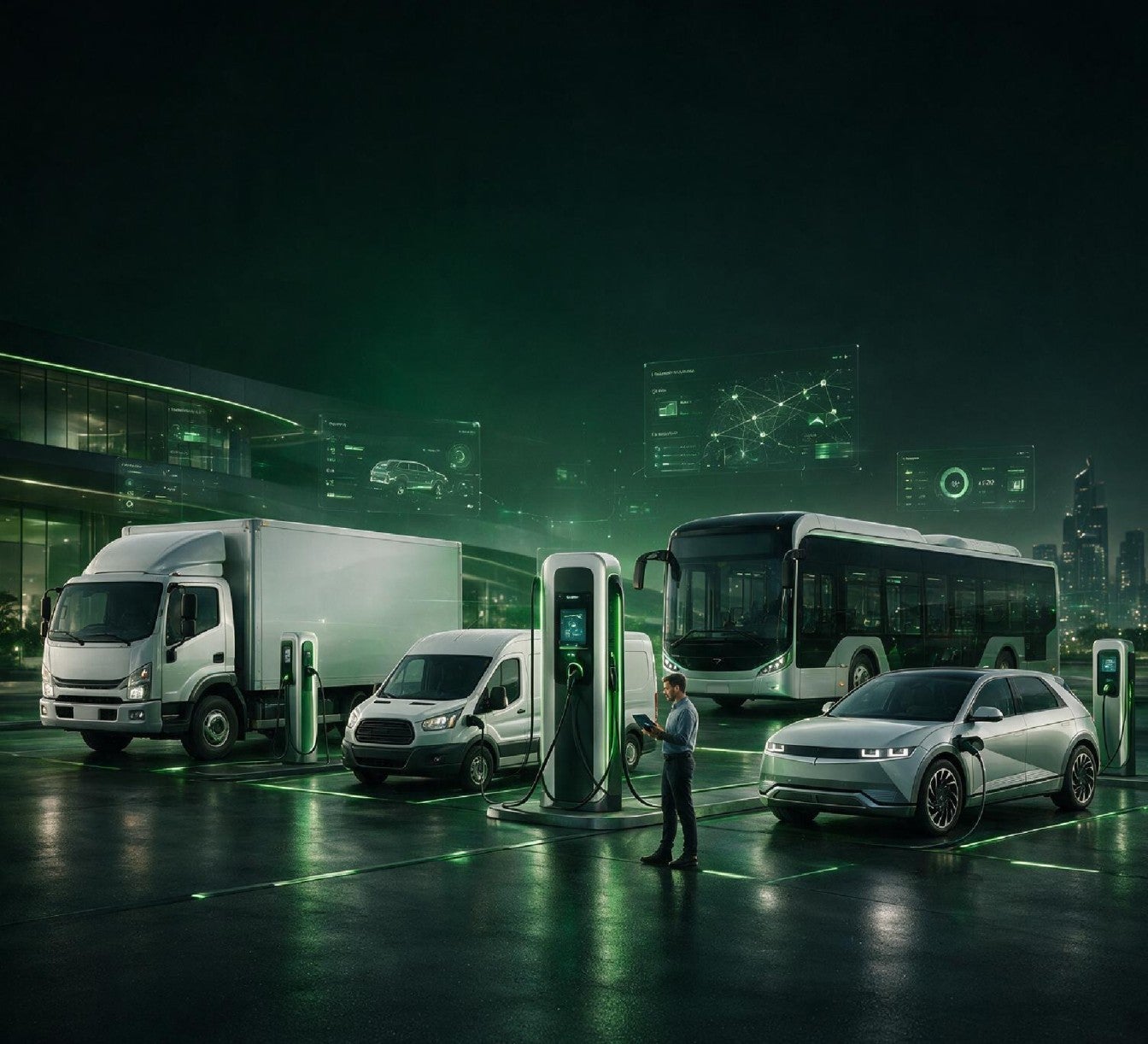
Fleet electrification refers to the transition of commercial and public sector vehicle fleets from internal combustion engine vehicles to electric vehicles. This includes:
- Electric buses
- Electric taxis
- Electric delivery vans
- Electric trucks
- Corporate fleets
- Public transport fleets
Unlike individual EV adoption, fleet electrification is driven by scale. A single operator may manage hundreds or thousands of vehicles, making the shift to electric mobility a major opportunity for manufacturers, software companies, energy providers, and service partners.
Why Fleet Electrification Is Gaining Momentum Across the GCC
The GCC is becoming a high potential market for fleet electrification because several forces are moving in the same direction: sustainability targets, urban growth, logistics expansion, infrastructure investment, and government backed mobility transformation.
The GCC electric vehicle market is forecast to grow from USD 11.64 billion in 2026 to USD 31.66 billion by 2031, according to Mordor Intelligence and commercial fleets are leading that growth, with vans, buses, and trucks expanding faster than the market overall as total cost of ownership becomes more favourable for high mileage operators.
As electric commercial vehicles become more capable and charging infrastructure expands, the business case for electrification becomes increasingly compelling, enabling fleet operators to reduce operating costs, improve efficiency, and transition toward cleaner commercial mobility at scale.
Total Cost of Ownership Is Changing the Conversation
For fleet operators, the transition to electric vehicles is about improving operational economics. As electric fleets can offer lower energy costs, reduced maintenance requirements, quieter operations, and better integration with fleet management technologies. For high mileage vehicles such as taxis, buses, delivery vans, and logistics fleets, even small efficiency gains can create significant long-term savings.
This is why total cost of ownership is becoming one of the most important decision factors in fleet transformation. Companies are increasingly assessing electric vehicles by upfront price, battery performance, charging speed, energy cost, maintenance cycles, residual value, and operational reliability.
Logistics and Delivery Fleets Are the Next Major Opportunity
Logistics and delivery companies are especially well positioned to benefit from electrification. Many delivery and urban logistics routes are predictable, and repeatable making them suitable for electric vans and light commercial vehicles.
As e-commerce, food delivery, and retail distribution continue to expand across the GCC, companies will need cleaner and more efficient fleet solutions. Electric fleets can help operators reduce fuel dependency, improve urban air quality, and meet corporate sustainability targets.
This creates opportunities across the full fleet solutions ecosystem, including commercial EVs, depot charging, route planning software, telematics, predictive maintenance, and energy optimization tools.
Fleet Management Technologies Define Operational Success
Electrifying a fleet requires a more intelligent operating model. Fleet technology providers have a major role to play in helping operators monitor battery health, optimize routes, schedule charging, manage driver performance, predict maintenance needs, and reduce downtime. AI, IoT, telematics, and connected mobility platforms are becoming essential tools for electric fleet management.
For operators, these technologies help answer practical questions: Which vehicles should be charged first? Which routes are most suitable for EVs? How can energy costs be reduced? When does a battery need servicing? How can vehicle uptime be protected?
This is where the commercial opportunity becomes wider than vehicles alone. Fleet electrification creates demand for software, data, analytics, maintenance platforms, charging management systems, and digital operations tools.
Why GCC Governments Are Accelerating the Shift
Government strategies are helping create long term demand signals for electric fleets. In the UAE, the National Electric Vehicles Policy aims to establish a national EV charging network, improve convenience for EV users, regulate the EV market, and support the ambition to increase electric and hybrid vehicles to 50% of all vehicles on UAE roads by 2050.
These policies and infrastructure investments create a stronger environment for fleet electrification. They help reduce uncertainty, encourage private sector participation, and support companies planning long term investments in commercial EVs and fleet solutions.
EV World 2026: Connecting the Fleet Solutions Ecosystem
As fleet electrification accelerates across the GCC, companies need a platform where they can connect with the right buyers, partners, and decision makers and where the region's own transport authorities are shaping that connection directly.
Organized by Dubai's Roads and Transport Authority (RTA), EV World is positioned as the region's leading platform for electric mobility, smart infrastructure, and sustainable transport innovation.
Taking place November 10–12, 2026 at the Dubai World Trade Centre, the inaugural edition is expected to bring together over 10,000 visitors from across the globe, 300+ exhibitors, 70+ speakers, 30+ partners, and 100+ delegates, spanning fleet operators, logistics companies, public transport authorities, commercial vehicle manufacturers, charging providers, software companies, investors, and government stakeholders.
Being backed by the same authority driving Dubai's mobility transformation and the UAE's national EV policy gives exhibitors something more than floor space, it gives them direct access to the institutions shaping fleet regulation and procurement across the region.
For exhibitors, EV World offers access to one of the region's most relevant audiences for fleet transformation: the companies and institutions planning, funding, operating, and scaling electric fleets. And as the inaugural edition, it offers early movers a rare chance to establish themselves as founding partners in the story of GCC fleet electrification before the market becomes crowded.
The Next Phase of Fleet Transformation
Fleet electrification across the GCC is entering a decisive stage. The opportunity is expanding into public transport, taxis, logistics, corporate fleets, and commercial mobility networks.
For businesses, the future of fleet operations will be electric, connected, data driven, and infrastructure led. Companies that move early will be better positioned to secure partnerships, win tenders, support government mobility goals, and capture demand across the GCC’s rapidly evolving commercial EV market.
Secure your space at EV World 2026 and position your brand alongside the leaders and companies shaping the future of electric fleets across the GCC.
For more information, registration, and participation, please visit: https://www.evworld.ae/
Read More
16 Jul 2026
EV Trends Defining the Next Wave of Business Growth in 2026
Electric mobility is entering a defining phase. As global markets accelerate investment in electrification, battery technology, charging infrastructure, and intelligent transport systems, 2026 is expected to become a landmark year for businesses looking to expand in the EV sector.
In 2026, the companies best positioned for growth will not only be those producing vehicles. They will be the businesses that understand where the EV market is moving next and how to align their products, partnerships, and investments with the trends reshaping the electric vehicle industry.
From global EV market growth to battery innovation, charging infrastructure expansion, AI driven mobility, and fleet electrification, the next phase of the industry is creating new opportunities for manufacturers, battery companies, charging providers, investors, technology companies, and OEMs.
What Is Driving EV Industry Growth in 2026?
The EV industry is being shaped by a powerful mix of market demand, policy support, technology advancement, and infrastructure development. According to the International Energy Agency (IEA), global electric car sales exceeded 20 million in 2025, meaning one in four new cars sold worldwide was electric, while electric cars are expected to represent around 28% of global new car sales in 2026.
BloombergNEF expects passenger EV sales to reach 23.3 million globally in 2026, accounting for 27% of global passenger vehicle sales. This growth shows that electric mobility is moving beyond early adoption by identifying the segments where demand, investment, and innovation are accelerating fastest.
Global EV Sales Growth Is Creating Market Expansion Opportunities
Global EV expansion remains the most important trend shaping business opportunities in 2026. With EV sales continuing to rise across major and emerging markets, companies have more room to scale across manufacturing, distribution, aftersales, software, charging, and fleet solutions.
China continues to lead the global EV market, while Europe, Southeast Asia, India, Latin America, and other emerging regions are also gaining momentum. The IEA reported that more than 100 countries recorded electric car sales growth in 2025, with electric vehicles reaching at least 10% of new car sales in one third of those markets.
For EV manufacturers and suppliers, this creates opportunities to expand beyond traditional mature markets and target regions where infrastructure, policy, and consumer adoption are beginning to align. For investors, it signals that EV growth is becoming more geographically diverse, creating new entry points across distribution networks, charging corridors, service platforms, and regional assembly.
Battery Innovation Is Reshaping Cost, Range, and Competitiveness
Battery innovation will remain a critical driver of EV industry growth in 2026, influencing everything from driving range and charging speed to cost competitiveness, safety, and large scale adoption.
The IEA notes that the average range of new battery electric cars has reached around 380 km, while expanding ultra-fast charging infrastructure is helping support longer trips. It also highlights that software and AI are increasingly improving battery management and charging performance.
BloombergNEF’s Electric Vehicle Outlook 2026 highlights the role of falling lithium-ion battery prices, more affordable EV models, and updated battery chemistry developments in supporting continued EV adoption.
For battery companies, this creates opportunities across battery chemistry, thermal management, battery management systems, recycling, and storage integration. As EV markets mature, buyers will look beyond vehicle design and focus more closely on battery reliability, lifecycle value, charging performance, and total cost of ownership.
Charging Infrastructure Expansion Is Becoming a Core Business Sector
Charging infrastructure is no longer just an enabler of EV adoption. It is becoming a major business opportunity in its own right.
As EV adoption increases, demand is growing for public chargers, ultra-fast charging networks, depot charging, workplace charging, residential solutions, smart charging software, and grid connected systems. For companies in the charging and infrastructure space, the opportunity lies in scale, reliability, location strategy, user experience, payment systems, data integration, and partnerships with real estate, retail, transport, hospitality, and energy operators.
In Dubai, this trend is already visible. Dubai Electricity and Water Authority (DEWA) reported that Dubai had more than 1,270 EV charging points by August 2025, while the number of EVs in the emirate exceeded 40,600 by the end of the first half of 2025. DEWA later stated that its network provides over 1,500 public charging points across Dubai in collaboration with government and private sector partners.
AI and Connected Mobility Are Turning EVs into Digital Platforms
EVs are increasingly becoming connected digital platforms rather than standalone vehicles. AI, telematics, software defined vehicles, cloud systems, and connected services are reshaping how vehicles operate and how users interact with mobility systems.
The IEA notes that software and AI related innovations are reshaping cars, with EVs sold in 2025 around twice as likely to be partially automated compared with internal combustion engine and hybrid vehicles. It also highlights that vehicle computing chips for driving automation have become five times more powerful since 2020.
Fleet Electrification Is Moving EV Growth from Consumers to Scale
In 2026, fleet electrification will become a major growth driver for the EV industry, shifting adoption from individual ownership to large scale commercial, logistics, and public transport transformation.
The UAE’s National Electric Vehicles Policy aims to build a national EV charging network, support EV owners, regulate the EV market, and increase the share of electric and hybrid vehicles to 50% of all vehicles on UAE roads by 2050.
In the Middle East, fleet electrification is especially relevant as governments and companies pursue cleaner transport, smart city strategies, and net zero targets.
CEO Market Insight: How Businesses Should Prepare
For business leaders, the next phase of EV growth requires more than market entry. It requires strategic readiness.
Companies should prepare by asking three key questions:
- Where does our solution fit in the EV value chain?
The strongest opportunities are emerging across infrastructure, batteries, fleets, software, finance, and smart mobility. - Which markets offer the right mix of policy, infrastructure, and demand?
The Middle East is becoming increasingly important as governments accelerate clean transport policies and infrastructure investment. - Who are the partners needed to scale?
EV growth depends on collaboration between governments, utilities, OEMs, fleet operators, investors, technology providers, and infrastructure developers.
In 2026, the most successful companies are those that connect innovation with market access, build the right partnerships, and position themselves in a fast growing mobility ecosystems.
The Middle East’s Next EV Growth Opportunity
The Middle East is becoming an increasingly important region for EV expansion. GCC markets are investing in clean energy, smart cities, EV charging infrastructure, fleet electrification, and sustainable transport strategies.
The GCC electric vehicle market is forecast to grow from USD 11.64 billion in 2026 to USD 31.66 billion by 2031, expanding at a CAGR of 22.15%, according to Mordor Intelligence. This reflects the increasing policy momentum, infrastructure development, and commercial demand across the region.
For global EV companies, the opportunity extends across the entire mobility ecosystem, from vehicles, batteries, and charging infrastructure to fleet solutions, smart city platforms, financing, insurance, and technology services. With its global connectivity, advanced infrastructure, and strong business environment, Dubai offers a strategic gateway for companies looking to scale across the Middle East and beyond.
EV World 2026: Connecting Companies to the Next Phase of EV Growth
As these EV trends accelerate, companies need platforms that connect them with buyers, investors, government stakeholders, and strategic partners.
EV World 2026 is positioned as the region’s leading platform for electric mobility, smart infrastructure, and sustainable transport innovation. The event connects EV manufacturers, charging infrastructure providers, battery and energy solution companies, policymakers, investors, technology leaders, fleet operators, and mobility innovators across the full EV value chain.
For exhibitors, EV World 2026 offers more than visibility. It provides a strategic platform to launch new products, meet government decision makers, connect with distributors, build commercial partnerships, access regional buyers, and expand into high-growth GCC markets. For companies looking to capitalize on EV Trends 2026, the event offers a timely opportunity to showcase solutions, strengthen market presence, and position their brands within one of the Middle East’s fastest growing future mobility markets.
The Next Wave of Electric Mobility Growth
The electric vehicle industry is entering a decisive stage. Global EV market growth is expanding, battery innovation is improving competitiveness, charging infrastructure is becoming a major investment sector, AI is redefining connected mobility, and fleet electrification is moving adoption toward scale.
For businesses, the message is clear: EV opportunity in 2026 is bigger than vehicles. It is about the full ecosystem that enables future mobility.
The electric mobility ecosystem is evolving at an unprecedented pace, and businesses that engage early will be best positioned to capture new opportunities. EV World 2026 provides the platform to connect with industry leaders, decision makers, and partners shaping the next generation of mobility across the Middle East.
Book your stand at EV World 2026.
Read More
08 Jul 2026
Why the UAE Is Becoming the Middle East’s Leading EV Business Hub
The electric vehicle industry is entering a new phase in the Middle East. What was once seen as an emerging transport trend is now becoming a serious business opportunity shaped by government policy, infrastructure investment, clean energy goals, and rising demand for smarter mobility solutions.
At the center of this shift is the UAE. With strong national strategies, expanding EV infrastructure, and Dubai’s growing role as a global smart city, the country is positioning itself as one of the region’s leading hubs for electric mobility, sustainable transport, and future ready infrastructure. For mobility stakeholders, the UAE is becoming a strategic gateway to the Middle East’s electric mobility future.
What Makes the UAE an EV Business Hub?
An EV business hub is more than a place where electric vehicles are sold. It is an ecosystem where policy, infrastructure, investment, technology, and market demand come together to support long term industry growth.
In the UAE, this ecosystem is being shaped by several factors, including:
- Clear national sustainability strategies
- Government support for EV adoption
- Expanding EV charging infrastructure
- Smart mobility and digital transport systems
- Public private partnerships
- Growing investment in clean energy and technology
- Dubai’s role as a regional business and innovation gateway
This combination gives the UAE a strong competitive position. It allows international companies to access a market that is supported by regulation, and infrastructure readiness.
Government Vision Is Driving Market Confidence
One of the UAE’s strongest advantages is that electric mobility is supported by clear government direction. The UAE Net Zero 2050 Strategy identifies transport as one of six priority sectors in the national transition and positions net zero as a driver of economic and societal advancement. The strategy is also expected to create 200,000 job opportunities across the solar, battery, hydrogen subsectors and contribute around 3% to national GDP.
For businesses, this creates confidence. When government strategies are clear, investors and companies can plan with greater certainty. This is especially important in a sector that requires long term investment in infrastructure, technology, fleets, energy systems, and customer adoption.
Dubai’s EV Infrastructure Is Expanding Rapidly
Charging infrastructure is one of the most important foundations of EV market growth. Without reliable charging access, adoption becomes slower for consumers, businesses, and fleet operators.
Dubai has made significant progress in this area. As Dubai Electricity & Water Authority (DEWA) EV Green Charger initiative has also played a key role in supporting Dubai’s EV infrastructure. The initiative helped create the region’s first public charging infrastructure for electric vehicles, with charging locations available through DEWA’s website, smart app, and other digital platforms.
This infrastructure growth is important because it supports fleet electrification, and creates new opportunities for charging operators, energy providers, real estate developers, and technology companies.
The Role of Dubai’s Green Mobility Strategy
Dubai’s Green Mobility Strategy 2030 has helped create a stronger framework for sustainable transport adoption. The strategy supports the use of green mobility solutions to reduce emissions from road transport, while government procurement has been used as a policy tool to accelerate market adoption.
This is a powerful signal to the market, when government entities adopt electric and hybrid vehicles, they help build early demand and encourage wider participation from manufacturers, suppliers, fleet operators, and infrastructure providers.
It also shows that Dubai’s EV progress is not only based on ambition, it’s being supported by practical policy tools that help move the sector from planning to implementation.
The Business Opportunities Behind EV Growth
The UAE EV market is creating opportunities across a much wider ecosystem.
Key growth areas include:
- EV charging infrastructure
- Battery innovation and energy storage
- Fleet electrification
- Public transport transformation
- Smart mobility platforms
- Vehicle financing and leasing
- EV insurance and warranty solutions
- Predictive maintenance and telematics
- Battery recycling and circular economy solutions
- Connected transport and smart city systems
This is why the UAE is becoming attractive to international exhibitors, investors, and technology providers. The market offers more than consumer demand. It offers a full business environment where mobility, energy, infrastructure, finance, and digital innovation are increasingly connected.
Why Global EV Brands Are Looking at Dubai
Dubai gives global EV businesses something highly valuable: access. The city connects international companies to the UAE, the GCC, the wider Middle East, Africa, and global trade routes. It also offers a business environment built around connectivity, innovation, and major international events.
Dubai’s Clean Energy Strategy further supports this positioning by aiming to produce 100% of Dubai’s energy requirements from clean sources by 2050 and positioning Dubai as a global center of clean energy and green economy.
For EV companies, this means Dubai serves as a regional base for partnerships, pilot projects, brand visibility, infrastructure development, and market expansion.
How Public Private Collaboration Is Scaling the EV Ecosystem
EV adoption cannot be scaled by one sector alone. It requires collaboration between government entities, utilities, private companies, investors, technology providers, real estate operators, transport authorities, and consumers.
Dubai’s EV ecosystem already reflects this approach. DEWA continues to work with public and private sector partners to expand charging infrastructure, while partnerships with entities are helping extend charging access across parking locations and service stations.
These partnerships are important because they help make EV adoption more practical. They improve accessibility, support customer confidence, and create the infrastructure needed for long term market growth.
EV World 2026: Connecting the Region’s Electric Mobility Ecosystem
As the UAE’s electric mobility ecosystem continues to grow, the need for a dedicated industry platform becomes more important.
EV World 2026 is positioned as the region’s leading platform for electric mobility, smart infrastructure, and sustainable transport innovation. The event brings together EV manufacturers, charging infrastructure providers, battery and energy solution companies, policymakers, investors, technology leaders, fleet operators, and mobility innovators.
EV World serves as a meeting point for the full EV value chain. It connects the companies and institutions shaping the future of mobility across vehicles, infrastructure, energy systems, smart transport, fleet solutions, autonomous technologies, and future mobility models.
For international exhibitors and partners, the exhibition offers a timely opportunity to engage with one of the region’s most dynamic EV markets and connect directly with the stakeholders driving the next phase of growth.
The Future of EV Growth in the UAE
The UAE is positioning itself as the Middle East’s leading EV business hub by treating electric mobility as a strategic engine for national growth. Its progress is being shaped by the convergence of sustainability, infrastructure development, investment momentum, technological innovation, and economic diversification.
Dubai’s progress demonstrates how markets can scale when long-term vision is supported by clear policy, enabling regulation, future ready infrastructure, and effective public private collaboration. As EV adoption continues to accelerate, the UAE is increasingly positioned to become a regional hub for electric mobility companies, investors, and innovators seeking to expand across the Middle East and beyond.
The future of mobility is being shaped today, and the UAE is building the infrastructure, partnerships, and innovation platform to lead it.
Explore the Future of Mobility at EV World 2026.
Read More
26 Jun 2026
Designing the Future of Mobility: How the UAE Government Is Leading the Transition
There is a difference between preparing for the future and designing it. While many countries are still adapting to disruption in transport and mobility, the UAE has positioned itself as a nation actively shaping what comes next through long-term policy, infrastructure investment, technology adoption, and institutional leadership.
Across the country, and particularly in Dubai, government entities are not simply supporting mobility transformation, they are driving it. From electric vehicle adoption and smart infrastructure to autonomous transport and sustainable urban planning, the UAE is building an integrated mobility ecosystem designed for the future.
Policy as the Foundation of Mobility Transformation
At the national level, the UAE’s direction is clearly anchored in long-term sustainability and innovation strategies. The UAE Net Zero 2050 Strategy identifies transport as one of the country’s priority sectors in achieving climate goals while supporting economic diversification and sustainable growth.
In parallel, the National Electric Vehicles Policy is accelerating the transition toward electric mobility by supporting the development of nationwide charging infrastructure, reducing transport sector energy consumption, and improving the EV ownership experience across the UAE.
Key Government Priorities Driving the Transition:
- Expanding nationwide EV charging infrastructure
- Reducing transport-related emissions
- Supporting clean energy and sustainability goals
- Accelerating electric and hybrid vehicle adoption
- Building a future-ready smart mobility ecosystem
Dubai has further strengthened this vision through the Dubai Green Mobility Strategy 2030, which aims to reduce transport-related emissions and encourage the adoption of electric and hybrid vehicles. Government procurement policies are also reinforcing this shift, with Dubai entities required to increase annual purchases of electric and hybrid vehicles to 20% from 2025 and 30% from 2030.
These initiatives demonstrate an important reality: mobility transformation does not begin with technology alone. It begins with regulation, long-term planning, and government leadership capable of creating market confidence and accelerating ecosystem growth.
RTA and the Shift Toward Smart & Autonomous Mobility
At the center of Dubai’s mobility transformation is the Roads and Transport Authority (RTA), which has become one of the region’s most influential drivers of smart and sustainable transportation.
Through its Sustainability Framework 2030, RTA is guiding Dubai toward a future of zero-emission public transport by 2050 while investing in climate-resilient and data-driven transport infrastructure. The authority is also leading the development of autonomous mobility solutions through Dubai’s Autonomous Transport Strategy 2030, which targets converting 25% of all trips in Dubai into autonomous journeys by 2030.
Dubai’s Smart Mobility Vision Includes:
- Zero-emission public transportation by 2050
- Autonomous mobility integration
- Smart and data-driven transport systems
- Digitally enabled public transport services
- Electrification of taxi and fleet operations
The impact of this transformation is already visible. According to RTA, public transport, shared mobility, and taxis in Dubai served more than 802 million riders in 2025, reflecting growing demand for integrated and digitally enabled transport systems. At the same time, 90% of Dubai’s operational taxi fleet became hybrid or electric in 2025, with a roadmap targeting a fully electric taxi fleet by 2040.
Building the Infrastructure for EV Adoption
Infrastructure development remains one of the most critical factors in accelerating electric mobility adoption, and Dubai has moved aggressively in this area.
Under DEWA’s EV Green Charger initiative, Dubai has rapidly expanded its charging network while establishing a regulatory framework that supports infrastructure growth and accessibility. By 2025, the emirate had surpassed 1,270 EV charging points and more than 40,000 registered electric vehicles, reflecting the market’s accelerating momentum.
Beyond charging stations, DEWA’s broader smart grid strategy is helping create the digital and energy backbone required for a connected mobility ecosystem. Vehicle-to-grid integration, predictive energy management, and intelligent infrastructure are increasingly becoming part of Dubai’s broader smart-city vision.
Infrastructure Developments Supporting EV Growth:
- Rapid expansion of EV charging stations
- Smart grid integration and energy management
- Vehicle-to-grid (V2G) capabilities
- Improved accessibility for EV users
- Public-private partnerships accelerating rollout
This approach highlights a key differentiator in the UAE’s strategy: EV infrastructure is not being developed as a standalone utility, but as part of a fully integrated urban mobility and sustainability ecosystem.
Why the UAE Is Becoming a Global Mobility Benchmark
What makes the UAE’s progress particularly significant is that these developments are not future ambitions, they are measurable milestones already shaping the mobility landscape today.
The country has demonstrated that successful mobility transformation depends on more than innovation alone. It requires long-term regulation, infrastructure readiness, institutional coordination, investment confidence, and the willingness to move early.
Why Global Mobility Leaders Are Watching the UAE:
- Strong government leadership and regulation
- Rapid infrastructure deployment
- Advanced smart-city integration
- Growing EV adoption and market demand
- Public-private ecosystem collaboration
- Clear long-term sustainability vision
Mobility Transformation Is Creating New Business Opportunities
As the UAE continues accelerating investment in electric mobility, smart infrastructure, charging networks, autonomous systems, and sustainable transportation, the market is creating significant commercial opportunities across the mobility ecosystem.
This transformation is opening new growth potential for:
- EV manufacturers and mobility brands
- Charging infrastructure providers
- Battery and energy storage companies
- Fleet and commercial mobility operators
- Software and smart mobility solution providers
- Investors, technology innovators, and strategic partners
As governments and cities across the region continue scaling their mobility ambitions, the demand for advanced technologies, infrastructure solutions, and sustainable transport systems is expected to grow rapidly in the coming years.
Explore the Future of Mobility at EV World 2026
As governments, mobility leaders, technology providers, and infrastructure innovators continue shaping the future of transportation, platforms that bring these stakeholders together are becoming more important than ever.
EV World 2026 will serve as a global platform connecting policymakers, industry leaders, investors, and innovators to explore the technologies, partnerships, and strategies driving the future of electric mobility and sustainable transport.
Join EV World 2026 to:
Connect with global mobility leaders and policymakers
- Discover the latest EV and smart mobility innovations
- Explore charging infrastructure and sustainable transport solutions
- Build strategic partnerships across the mobility ecosystem
- Be part of the conversation shaping the future of transportation
The future of mobility is already being built, and EV World 2026 is where the industry comes together to drive what’s next.
Visit EV World 2026 and explore the next era of electric mobility, smart infrastructure, and sustainable transportation.
Book Your Stand Today.
Read More

19 Jun 2026
Why the Middle East Is the Next EV Growth Market?
The global shift toward electric mobility is creating new growth opportunities across emerging markets, and few regions are moving as rapidly as the Middle East. Supported by ambitious government policies, major investments in infrastructure, and growing consumer demand, the region is becoming an attractive destination for electric vehicle manufacturers, charging providers, battery companies, and mobility innovators.
For companies looking to expand internationally, understanding the opportunities and challenges of the Middle East EV market is essential to building a successful market-entry strategy.
Why the Middle East EV Market Is Growing So Quickly
According to Mordor Intelligence's GCC Electric Vehicle Market Report (2024–2029), the market is projected to grow from USD 3.33 billion in 2024 to USD 9.42 billion by 2029, making it one of the world's fastest-growing electric mobility markets.
Several factors are driving this growth:
- Government-led sustainability initiatives
- Net Zero commitments
- Large-scale infrastructure investments
- Increasing EV adoption rates
- Rapid urbanization and smart city development
- Strong foreign investment in future mobility technologies
Countries such as the UAE and Saudi Arabia are leading this transformation, creating significant opportunities across the entire EV value chain.
Why the UAE Has Become a Gateway for EV Companies
Supported by progressive mobility policies, smart city initiatives, and ongoing investments in sustainable transportation, Dubai continues to strengthen its position as a leading regional hub for future mobility innovation. With a strong focus on electrification, advanced infrastructure, and global connectivity, the city provides an ideal environment for companies seeking to expand across the Middle East and access fast-growing EV markets.
The UAE has positioned itself as one of the region’s leading electric mobility hubs. The country’s strategy includes:
- National Electric Vehicle Policy
- UAE Net Zero 2050 Strategy
- Expansion of charging infrastructure
- Electrification of public transportation
- Investment in smart mobility technologies
- Support for innovation and foreign investment
Dubai, in particular, offers companies direct access to regional markets across the GCC, Africa, and Asia, making it an ideal base for expansion.
Major Opportunities in the Middle East EV Market
Charging Infrastructure
Demand for public and private charging networks continues to grow rapidly, creating opportunities for charging providers, technology companies, and energy suppliers.
Fleet Electrification
Governments and businesses are increasingly transitioning public transportation and commercial fleets to electric vehicles.
Battery and Energy Storage
Growing EV adoption is creating demand for battery technologies, recycling solutions, and energy storage innovations.
Smart Mobility Technologies
Connected mobility, vehicle-to-grid systems, AI-powered fleet management, and digital transportation platforms are becoming critical components of the future mobility ecosystem.
Local Manufacturing and Investment
Governments are investing heavily in local production capabilities and encouraging partnerships with international companies.
Challenges Companies Need to Consider
Despite strong growth potential, entering the Middle East EV market requires careful planning.
Common challenges include:
Understanding Regulatory Frameworks
Policies and incentives vary across countries.
Building Local Partnerships
Success often depends on working with local distributors, government entities, and technology partners.
Infrastructure Readiness
Charging networks continue to expand, but market maturity differs from one country to another.
Market Education
Consumer awareness and adoption rates vary across the region.
Companies that understand these dynamics are better positioned to achieve long-term success.
Why Strategic Partnerships Matter
The future of electric mobility cannot be built by one company alone.
The most successful market entrants are those that develop strong partnerships with:
- Government entities
- Fleet operators
- Energy companies
- Technology providers
- Investors
- Infrastructure developers
- Mobility innovators
Partnerships accelerate market access, reduce risk, and create new business opportunities.
Why Dubai Is Becoming the Meeting Point for the EV Industry
Dubai has emerged as one of the world's leading destinations for business, innovation, and future mobility.
Its strategic location, advanced infrastructure, and pro-business environment make it the ideal place for companies seeking expansion into the Middle East.
The city increasingly serves as a platform where:
- Industry leaders connect
- Investment opportunities emerge
- New technologies are introduced
- Strategic partnerships are formed
Discover the Middle East EV Opportunity at EV World 2026
For companies looking to enter or expand within the Middle East electric mobility market, building relationships with the right stakeholders is essential.
EV World 2026 brings together policymakers, investors, manufacturers, infrastructure providers, and technology innovators on one platform dedicated to the future of electric mobility.
Whether you are seeking new customers, strategic partners, or market insights, the event provides direct access to the people and opportunities shaping the next era of transportation.
Join EV World 2026
📍 Dubai World Trade Centre, Dubai, UAE
📅 10–12 November 2026
Exhibit at EV World 2026 and Accelerate Your Market Expansion.
Read More
11 Jun 2026
The Future of Mobility in the UAE
The future of mobility in the UAE is no longer a distant vision, it is happening today. Driven by ambitious sustainability goals, smart city initiatives, and rapid technological innovation, the UAE is positioning itself as one of the world's leading hubs for next-generation transportation.
From electric vehicles (EVs) and autonomous transportation to smart infrastructure and connected mobility ecosystems, the country is creating an environment where innovation and sustainability go hand in hand.
Why the UAE Is Leading the Mobility Transformation
The UAE continues to strengthen its position as a regional leader in sustainable mobility, supported by strong government-led initiatives and infrastructure investment.
For example, the UAE EV market is projected to grow by around 27% annually, reflecting rapid national adoption and policy-driven expansion.
The UAE has placed sustainable development at the center of its long-term national strategies. Through initiatives such as the UAE Net Zero 2050 Strategy and Dubai's Green Mobility Strategy 2030, the nation is accelerating the adoption of clean transportation solutions while reducing dependence on traditional fossil-fuel-powered mobility.
Government support, public-private partnerships, and investment in infrastructure continue to strengthen the country's position as a regional leader in future mobility.
The Rise of Electric Mobility
Electric mobility is becoming a cornerstone of the UAE transportation ecosystem. As charging infrastructure expands and EV ownership becomes increasingly affordable, more consumers and businesses are making the transition to electric transportation.
EV adoption in the UAE is expected to reach 15% of new vehicle sales by 2030, increasing to 25% by 2035, driven by expanding charging networks and affordability improvements.
Several factors are driving this growth:
- Expanding public charging networks
- Government incentives and policy support
- Lower operating and maintenance costs
- Increased model availability from global manufacturers
- Growing environmental awareness among consumers
The UAE EV market is expected to experience significant growth over the next decade as both public and private sectors invest heavily in sustainable mobility solutions.
Smart Cities Driving Innovation
Cities such as Dubai are integrating mobility into broader smart city strategies. Intelligent traffic management systems, connected infrastructure, AI-powered transportation services, and data-driven urban planning are transforming how people and goods move across urban environments.
- Smart mobility solutions offer:
- Reduced congestion
- Improved road safety
- Greater energy efficiency
- Enhanced user experience
- Lower carbon emissions
These innovations are creating a seamless mobility ecosystem that supports sustainable urban growth.
Infrastructure as the Foundation of Growth
No mobility transformation can succeed without strong infrastructure. Across the UAE, significant investments are being made in EV charging stations, renewable energy integration, smart grids, and intelligent transportation systems.
Dubai’s public charging network is set to grow significantly, with targets to increase infrastructure from 370 chargers in 2023 to over 1,000 by 2025, supporting mass EV adoption.
The rapid expansion of charging infrastructure is helping eliminate one of the main barriers to EV adoption, range anxiety while supporting the growing number of electric vehicles entering the market.
The Role of Technology
Emerging technologies are reshaping the transportation sector faster than ever before.
Key innovations include:
- Vehicle-to-Grid (V2G) systems
- Artificial Intelligence (AI)
- Predictive maintenance solutions
- Connected vehicle technologies
- Advanced battery systems
- Autonomous driving platforms
Together, these technologies are creating a more efficient, connected, and sustainable transportation ecosystem.
Business Opportunities in Future Mobility
The global EV market is expected to approach $1 trillion by 2030, highlighting the massive investment opportunities across the mobility value chain.
The mobility transition is creating new opportunities across the entire value chain.
Opportunities include:
- EV manufacturing
- Charging infrastructure
- Battery technology
- Energy management solutions
- Fleet electrification
- Smart mobility platforms
- Sustainable transport services
Investors, startups, technology providers, and established mobility companies are increasingly looking to the UAE as a gateway to regional and global growth.
The Future Starts Now
The future of mobility in the UAE is being shaped by innovation, sustainability, and collaboration. As governments, businesses, and technology leaders work together, the country continues to set new benchmarks for clean transportation and smart mobility.
Events such as EV World bring together industry stakeholders, innovators, policymakers, and investors to explore the technologies and partnerships driving this transformation.
The journey toward sustainable transportation has already begun and the UAE is leading the way.
Explore the Future of Mobility at EV World 2026
Read More